Back to work part time  (Stuart Robbins)

Back to work part time (Stuart Robbins)

A Few Thoughts After Returning to Work

February marked my return to work after my second microdiscectomy in two years.

I won’t sugar-coat it. It’s been tough.

Coming back part-time has been the right decision, but it has still been humbling. I’ve done the rehab. I’ve followed the advice. I’ve applied the same principles I talk about every day with patients. And even then, some days have felt heavier than I expected.

One thing this whole experience has reinforced for me is just how different pain feels when it’s yours.

When you’re the practitioner, you can analyse it. You can break it down. You can explain healing timelines and tissue physiology. But when you’re the one lying awake at night because your leg is aching or your back feels tight again, it becomes very human very quickly.

There’s vulnerability in that.

Lying on the trolley before surgery, you’re not an osteopath. You’re not the clinic director. You’re just a person hoping the procedure goes well and that you’ll get your life back. That perspective stays with you.

I think it has changed how I listen.

When someone tells me they’re nervous about bending, or worried they’ll “slip a disc again”, or frustrated that progress isn’t fast enough, I genuinely understand that in a different way now.

Another thing I’ve been reminded of is that knowing what to do is not the same as doing it consistently.

Rehab is not glamorous. It’s repetitive. It’s disciplined. It’s turning up to do the basics when you’d rather skip them. It’s backing off when your ego tells you to push. It’s accepting that you’re rebuilding, not proving something.

And yes, ego creeps in. I’ve written before about ego and injuries, and I’ve had to confront that in myself again. The quiet voice that says, “You should be better than this by now.” The temptation to test things just to see if you can.

Twice now my body has reminded me that biology doesn’t care about pride.

There have been flare-ups. There have been flat days. There have been moments where I’ve questioned how long the road back will take.

But there’s a line from Rocky that keeps coming back to me. It’s not about how hard you hit. It’s about how hard you can get hit and keep moving forward.

That feels more relevant to recovery than any rehab protocol.

It’s not dramatic. It’s not heroic. It’s just steady. You take the hit, you reassess, you adjust, and you keep going.

Coming back part-time has also forced me to respect the fact that I’m human. I can’t just override fatigue or irritation because I want to. I can’t will tissues to heal faster. I can only control what I do each day.

For patients reading this, if you’re navigating injury or surgery yourself, I’d say this:

Healing is rarely linear.
Setbacks are not the same as failure.
Consistency matters more than intensity.
Your mindset genuinely influences your experience of pain.

And importantly, you’re not weak for finding it hard.

For colleagues, there’s something confronting about being injured when your body is your tool. It shakes identity a bit. But it also deepens empathy. It sharpens patience. It reminds you that we’re not above the principles we teach.

I’m back. I’m working part-time. I’m rebuilding carefully.

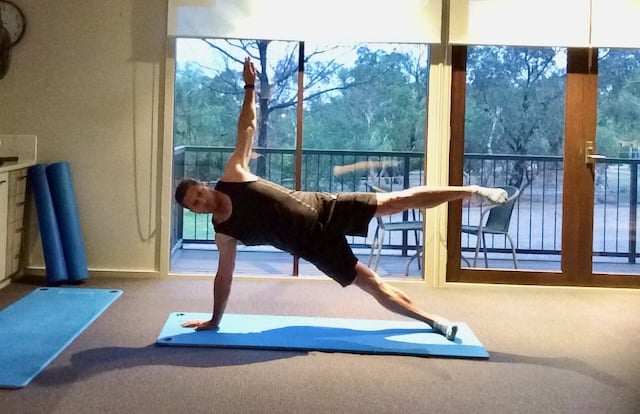
I’m doing the exercises.
I’m respecting the process.
I’m staying positive without pretending everything is perfect.

And if there’s one thing this journey keeps teaching me, it’s this: you don’t have to be invincible. You just have to keep getting back up.

Stuart

For fellow practitioners

Being injured as a clinician is confronting. Your body is your tool. When it struggles, it can feel like more than just a physical issue.

What I have gained from this experience is deeper empathy, more patience, and greater respect for the basics.

You do not have to be invincible to be effective. You simply have to be honest, disciplined, and willing to keep rebuilding.

This journey is ongoing. Rehab continues. Strength continues. Learning continues.

And I am grateful to be back, even if it is one measured step at a time.

Stuart


Reflections from Theatre: Skill,  Teamwork, and Perspective in Spine Surgery. (Stuart Robbins)

Reflections from Theatre: Skill,  Teamwork, and Perspective in Spine Surgery. (Stuart Robbins)

Reflections from Theatre: Skill,  Teamwork, and Perspective in Spine Surgery.

Author: Dr Stuart Robbins (Osteopath)

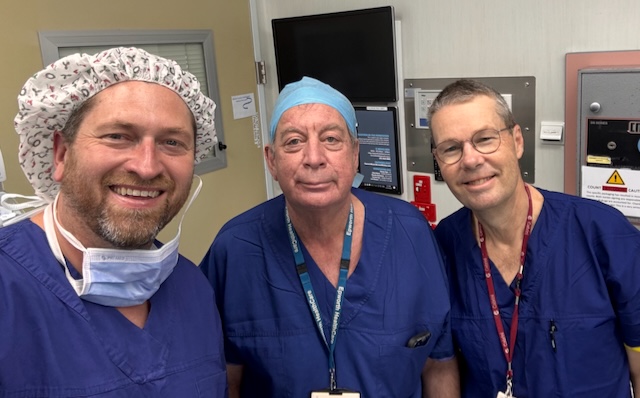
Recently, I had the opportunity to observe four spinal surgeries performed by Mr David De La Harpe, alongside his long-standing assistant surgeon Mr Tim Hurren. I was invited into theatre by Mr De La Harpe, and I am mindful that this was a generous and individual opportunity rather than a routine or widely available experience.

The invitation arose through a personal connection. My mother previously worked in theatre with Mr De La Harpe, and when I later required spinal surgery myself, he became the surgeon involved in my care. It is likely that this existing familiarity afforded me the opportunity to observe his work in this way.

As an osteopath, and as someone currently recovering from recent spinal surgery, the experience offered insight not only into surgical technique, but into the judgement, teamwork, and professional presence required across very different patient presentations.

Notably, the surgeons I observed were the same surgeons who had performed my own operation only weeks earlier. Observing their work from the other side of the drapes added a unique and grounding perspective that blended professional curiosity with personal appreciation.

At a time when I am temporarily unable to treat patients, I have been using the opportunity to broaden my exposure to other aspects of healthcare and deepen my understanding of other disciplines. Observing surgery in this context felt both professionally valuable and personally meaningful.

I was met at reception, escorted through a labyrinth of hallways, I changed into scrubs, was welcomed into theatre, and introduced to the broader surgical, anaesthetic, nursing, and theatre technical team. From the outset, there was a calm professionalism in the room that reflected trust, repetition, and shared experience.

Preparation, Presence, and Responsibility

Before the first surgery began, I became aware of the different ways responsibility is carried within the theatre. Mr De La Harpe’s pre-operative presence was calm, contained, and highly focused. There was a sense of deliberate mental rehearsal, an internal settling that reflected the weight of accountability inherent in his role as lead surgeon.

Rather than feeling disengaged, this quiet focus conveyed trust in the team around him and in the systems already in place. Communication was precise and intentional, with no unnecessary words, creating clarity and readiness rather than distance.

Alongside this, Mr Hurren, in his role as assistant surgeon, demonstrated a more outwardly communicative leadership style. He engaged readily with nursing staff, theatre technicians, and the anaesthetic team, helping to align the broader group and maintain a sense of shared awareness and flow within the room. The contrast was not hierarchical, but complementary, two different expressions of leadership serving the same outcome.

This preparation extended beyond mindset alone. Using a marker, anatomical landmarks were carefully identified and marked on the patient, and the limb associated with radicular symptoms was clearly indicated. These visible cues acted as both practical guides and deliberate safety measures, reinforcing intention before any incision was made.

The wider team then participated in a structured pre-operative check. The patient’s identity, the planned procedure, and the surgical site were read aloud and confirmed, bringing the entire theatre into alignment. This shared moment of verification highlighted that responsibility for patient safety is collective, not individual.

Rather than feeling procedural or routine, these steps carried a sense of respect for the patient, for the process, and for the seriousness of what was about to unfold. Observing this layered preparation reinforced how effective surgical leadership is expressed not only through technical authority, but through presence, communication, and the ability to bring a team together around a shared purpose.

The parallels to clinical practice outside the theatre were hard to miss. While osteopathic treatment rooms may appear quieter or more solitary, the same principles of preparation, intention, and presence remain central to good care.

Observing this dynamic also prompted personal reflection. While I can be animated in everyday settings, when I step into the treatment room I make a conscious effort to slow my pace and settle my focus. I often remind myself that this is the patient’s time, and that I am there to hear them, to listen, and to listen again. Presence in clinical work often requires less outward expression and more internal clarity, particularly when responsibility is high.

Team Cohesion and Leadership in Action

Beyond the surgeons themselves, there was a strong sense of cohesion within the wider theatre team. Communication flowed easily between surgeons, nursing staff, theatre technicians, and the anaesthetic team, contributing to a shared sense of readiness before and during each procedure.

Throughout the session, there was also an undercurrent of concern for a colleague working in another theatre who had reportedly collapsed or fallen earlier in the day. Details emerged gradually, but what stood out was the genuine care expressed across the team. Quiet check-ins and shared concern for their colleague’s wellbeing were a reminder that even in high-pressure, highly technical environments, people remain attentive to one another. The culture of care extended beyond the immediate surgical task.


Synergy in Action

Across all four surgeries, the synergy between Mr De La Harpe and Mr Hurren was consistent and unmistakable. It was something I noticed very early in the session and then continued to observe throughout the day.

At times, their heads were almost touching as they worked over the patient, both focused on the same operative field and moving seamlessly in and out of each other’s space. There was a rhythm to their movements. Instruments were exchanged with minimal words, and actions were anticipated rather than directed.

It often felt as though four hands were operating as part of a single coordinated system rather than two separate individuals.

At various points throughout the day, Mr Hurren would refer to Mr De La Harpe simply as “the boss”, a small but telling acknowledgement of experience, leadership, and trust, expressed with warmth rather than formality.

During one procedure, Mr Hurren also expressed genuine admiration for a moment of technical adaptability. When access was limited and an instrument could not be comfortably positioned with the right hand, Mr De La Harpe calmly switched hands, altered his angle, and completed the task with precision. It was an understated moment, yet a powerful demonstration of ambidexterity, spatial awareness, and experience, qualities refined over time and I suspect difficult to teach.


Teamwork Beyond the Room

Observing surgical teamwork so closely also prompted reflection on how teamwork manifests in osteopathic practice. Unlike the operating theatre, where multiple clinicians work simultaneously around a single patient, most osteopaths practise alone in their treatment rooms.

Yet this does not mean our work is isolated.

In osteopathy, teamwork often lives in communication, shared learning, and continuity of care rather than simultaneous hands-on intervention. Case discussions, mentoring, patient crossovers, and thoughtful handovers all form part of how we support one another clinically.

Beyond our own profession, effective osteopathic practice relies on collaboration with the broader interdisciplinary team, including general practitioners, podiatrists, Pilates instructors, exercise physiologists, and reception staff, all of whom play a vital role in patient care.

The surgical environment highlighted not a model to replicate directly, but a principle to translate. Teamwork does not require multiple people in the room at once. It requires clarity of roles, mutual respect, shared goals, and consistent communication.


The First Surgery: Precision, Anatomy, and Judgement

The first procedure, an anterior cervical discectomy and fusion (ACDF), was the one I found most technically fascinating. The patient was a young, muscular male, and at first there was something almost striking about the idea of addressing a cervical problem from the front of the neck. I remember thinking how remarkable it was that the pathology could be approached in this way, before quickly being reminded just how much critical anatomy occupies that space.

At the beginning of the procedure, fluoroscopy was used to confirm positioning, with lead protection donned and non-essential staff stepping out of the theatre. It was at this point that I became more aware of the cumulative radiation exposure surgeons accept as part of their work, a quiet and often unseen aspect of surgical responsibility that underpins accuracy and safety.

As I observed more closely, I reflected on the key structures that must be carefully protected, including vascular and neural elements, the airway and oesophagus, the borders of the sternocleidomastoid, and the recurrent laryngeal nerve. The approach highlighted how success in this region depends as much on respect for anatomy as it does on technical execution.

The patient’s muscular build also influenced the procedure. Longer retractors and instruments were required at various stages, reinforcing that surgical technique must continually adapt to individual anatomy rather than follow a fixed template.

I was particularly struck by the mechanical precision of the technique. Caspar pins were placed into the vertebral bodies and used in multiple ways throughout the procedure. Initially, a traction device was applied to these pins to create controlled separation between the vertebrae, allowing access to the disc space without the need for sustained manual force.

Following removal of the disc material, careful consideration was given to cage size and fit, with trialling and assessment undertaken before the final implant was selected and inserted. Once appropriate spacing and positioning were confirmed, the same pins were removed, and the channels they had created effectively became pre-drilled pathways for application of the anterior plate, stabilising the construct and reducing the risk of anterior migration.


Complexity, Perspective, and Recovery

The second surgery involved an elderly gentleman with a history of prior spinal surgery and additional degenerative change, including a cyst contributing to posterior compression at the lumbar level.  In discussion with Mr De La Harpe following the procedure, the focus turned to the importance of managing patient expectations.

We spoke about the role of patient education and the challenge of finding the right balance between preserving function as the primary goal, while acknowledging that complete pain resolution may not always be achievable. It reinforced how expectation management is a critical component of care across all areas of healthcare, not only surgery.

The final two procedures, L5–S1 microdiscectomy and laminectomy, were similar to my own recent operation, though performed one level below. Observing these cases was unexpectedly personal and deepened my appreciation for tissue handling, closure, and the patience required during recovery.

As the day progressed, I became increasingly aware of my own healing incision and its residual tenderness, as well as my reduced tolerance for prolonged standing. While I was able to alternate between sitting and standing and continue observing the operative field via the monitors, it heightened my awareness of the physical demands placed on surgeons, who remain standing at the operating table for extended periods. Whether psychosomatic or not, the experience reinforced my respect for the endurance required in surgical practice.


Reflections for Practice

This experience reinforced several principles I carry back into osteopathic practice:

  • Precision begins with preparation and confirmation
  • Respect for anatomy is paramount
  • Teamwork underpins all good outcomes
  • Expectation management is as important as intervention
  • Function and safety often matter more than pain alone
  • Healthcare work is physically demanding and deserves respect


Gratitude

I am deeply grateful to Mr David De La Harpe, Mr Tim Hurren, David’s PA Greg Frost and the entire theatre, nursing, anaesthetic, and technical team for welcoming me into their environment and sharing their expertise so openly.

It was a privilege to observe, to learn, and to reflect.

 

Ego and Sustaining Injury in the Garden and the Gym: A Personal Reflection (Stuart Robbins)

Ego and Sustaining Injury in the Garden and the Gym: A Personal Reflection (Stuart Robbins)

Ego and Sustaining Injury in the Garden and the Gym: A Personal Reflection (Stuart Robbins)

Ego can be a formidable barrier to maintaining physical health, particularly in environments like the garden and the gym. I’ve learned this lesson the hard way, and my experience underscores the importance of keeping ego in check to avoid injuries and maintain a pain-free body.

A Painful Lesson in the Garden

A few years ago, I decided to remove an old tree stump from my garden. Impatient and determined to get the job done quickly, I ignored my more logical inner voice telling me to dig a deeper hole or use a car and chain to pull it out. Instead, I relied solely on brute strength, convinced that I could handle it myself. I strained and tugged with all my might, feeling a sharp pain shoot through my lower back.

As an Osteopath I suspected in that moment that I had sustained a mild lumbar disc injury. “How could I be so bloody stupid, I knew better than that”.  The pain was intense and simple tasks like bending or lifting became excruciating. This injury was a direct result of my impatience and refusal to acknowledge my physical limits. If I had taken the time to use the right tools and methods, I could have avoided this debilitating injury.

Exacerbating the Injury in the Gym

After the injury, I dedicated myself to recovery. I spent months doing Pilates and other exercises specifically designed to strengthen my core and support my back. Gradually, I regained my mobility and the pain subsided. Feeling stronger and more confident, I believed I had fully recovered.

Despite the significant improvement, my ego didn’t take a break. Determined not to fall behind in my gym routine, I decided to push myself even harder. On one particularly ego-driven day doing a power lifting session, I loaded the barbell with 180kg, determined to outdo my fellow gym-goers. Ignoring the lingering pain in my lower back, I went for the full squat that is “Ass to Grass”.

As I descended with the weight, I felt an agonising surge of pain in my lumbar region. The previous injury flared up with a vengeance, and I could barely stand up, let alone complete the lift. This reckless decision not only exacerbated my existing injury but also sidelined me from physical activities for months.  “I should have known better, I would never have advised someone else to do something like that!” My overestimation of my recovery and failure to respect my body’s limits led to this setback.

Managing the Injury and a Recent Setback

As a result of this initial injury and making it worse in the gym, I’ve spent the many years managing my back pain quite well for the most part.  I’ve used regular Osteopathic treatment, done Pilates and other exercises.  I even took up dancing which is truly amazing for balance, core control amongst other benefits.  At one stage, I decided that running was no longer a good option for me which is a shame as I really enjoyed.  The whole time I have been aware that at any moment I could do something that could further exacerbate my condition.

About three months ago, it seems that moment happened. I was rollerblading with my children when, for some silly reason, I thought it would be fun to emulate some of the kids dancing on their skates. I proceeded to pick one of my legs up in the air, and before I knew it, I was lying on my back looking at the sky, experiencing a sudden jolt throughout my back. Having had a number of back flare-ups over the past seven years, I thought to myself, “That’s going to hurt for a few weeks,” and it sure did, I shook myself off and took it easier for the rest of the session. However, a few weeks of pain soon grew into a month, and then two, and then three. My pain didn’t improve much, and my left foot and leg started to feel numb, I couldn’t sit especially in the car, and on some level its affecting my balance, and much loved dancing. Clearly, my disc injury had progressed.

I decided it was time to get an MRI to see how bad I had made it. It quickly became clear that I might need surgery to get better, so I consulted with a surgeon who promptly agreed. With my ego quite bruised to match my body, I’ve come to terms with it and have booked surgery for June. I have been quite stubborn trying to manage this myself for so long.  

The Struggles of Chronic Pain

Living with chronic pain, especially low back pain, can have profound effects on a person’s life. It can severely limit participation in family activities, making it difficult to enjoy outings, play with children, or even complete simple household tasks. This restriction can lead to feelings of frustration and helplessness.

The impact on mood is significant. Chronic pain often leads to irritability, depression, and anxiety, which can strain personal relationships. Loved ones may struggle to understand the constant discomfort and limitations, leading to feelings of isolation and misunderstanding. Maintaining a positive outlook becomes challenging when pain is a constant companion, affecting not only the individual but also those around them.

The physical limitations imposed by chronic pain can also affect self-esteem and confidence. Activities once enjoyed, like running or dancing, become sources of fear and anxiety. The constant need to be cautious to avoid exacerbating the pain can be mentally exhausting, creating a cycle of fear and avoidance.

The Importance of Keeping Ego in Check

These experiences have taught me the critical importance of managing ego. In the garden, had I been more patient and mindful, I would have used the right tools and techniques, preventing the initial injury. In the gym, respecting my body’s signals and focusing on proper form rather than competing with others could have prevented the exacerbation of my injury.

Maintaining an easeful body, free from chronic pain, requires a humble and balanced approach to physical activities. In both gardening and exercising, it’s crucial to set realistic goals, gradually increase intensity, and listen to one’s body. Consulting with professionals, using proper techniques, and incorporating rest are essential strategies.

Whether in the garden or the gym, managing ego is crucial to avoid injury and maintain a healthy, pain-free body. Embracing humility, practicing mindfulness, and respecting one’s physical limits are key strategies for achieving this balance. By doing so, individuals can continue to engage in their favourite activities, reaping the physical and mental health benefits they offer, without the detrimental consequences of ego-driven overexertion.


A good friend of mine who recently had a hip replacement talked about his pain before his surgery, he described it as a gradual slow process that snuck up on him, he used the analogy that he felt like a frog in a pot cooking so slowly that he didn’t realise it was happening to him.  He said that after his surgery he was surprised how bad he had let things get and that he is feeling great.  This resonated with me and really makes me think that perhaps I have been particularly stubborn and possibly giving to much value to being stoic? 

I am trying to be optimistic that I will have a good surgery and recovery.  I know that in my time off I will deeply miss helping people with Osteopathy, I will very much miss dancing, but hopefully, I will be able to return to both a bit later in the year, possibly better than ever, and more than anything during my rehab I am hoping to keep my ego in check!

How many times a week should I do Pilates?

How many times a week should I do Pilates?

We asked Dr Stuart Robbins (Osteopath) Director at Gateway Osteopathy & Pilates how frequent should individuals do Pilates?

Should I do Pilates x 1 per week or 3-5 x per week?

His response was, “Just like Pilates itself, the answer isn’t one size fits all”.

That’s a great question, I’ve been asked this a lot by patients over the years.

To effectively address questions of this nature, it often necessitates a thorough inquiry to various related areas. This is precisely why most individuals opt for a Private Initial Assessment with one of our dedicated teachers, here at Gateway. In my opinion you can benefit from doing Pilates once a week, for many years now I have seen so many people doing just that.  You may be an office worker who has a stiff body in need attention and a bit of a postural reset.  By doing just one session a week you may feel and function better, which will be enough in conjunction with other healthy lifestyle choices to assist you through the week.  You may be an athlete who wants to do Pilates to supplement a training session, or to enhance your sense of core control and stability, and once again just one session a week can often make a difference.  In the case of clinical Pilates a good instructor will look at you, assess you, and get you doing what they believe you need to do to move and feel better.  Pilates is about using movement to heal, move and feel better.

There is definitely an argument that people to gain great results from doing Pilates more frequently.  If Pilates is the only activity you are doing for exercise, perhaps you have got the bug and you just seem to love it, then I do believe it can be a great way to change or transform your body.  You may be choosing to do Pilates 3-5 sessions per week.  However, I do caution doing Pilates this frequently may be a bit of a double-edged sword!  What I mean by this is, you can sometimes have too much of a good thing.  To qualify my comment, for many years now I have seen patients who attend a lot of reformer classes, these are choreographed classes where everyone doing essentially the same movements on a Pilates reformer.

If you’re participating in a variety of classes led by different instructors, and they may not have knowledge of your previous week’s activities, there’s a significant risk that your “Pilates” program, and I use the term loosely, may become somewhat unbalanced. This could amplify the likelihood of overworking one area of your body compared to another. It is not uncommon for me to see patients who have sustained for example a neck injury from overworking their neck flexors, in an endeavour to feel the burn in their abdominals with little regard for neck alignment and the Pilates Principle of “axial elongation”.

Discussing hip flexors, trunk flexors and neck flexors is almost another topic so I won’t segway too much, and I’ll try and stay on topic;-  

.. and so my answer is if you haven’t been exercising much at all and you decided to do “Reformer Classes” 3-5 x per week all of a sudden it may not end in the perfect body you are hoping for.

Your Pilates frequency.. if it is to increase from 1 to 3 or even 5 sessions a week, should be a decision based around your current physical status, existing injuries, occupation, other activities you perform, essentially your entire lifestyle and other aspects of your life.  It should consider your current physical and mental state and possibly your budget. 

At our studio we have many people who only attend once per week and experience the benefits of Pilates. Often people are too fixated on the physical benefits alone, when participating in just one class may also be significant in the scope of social and emotional support for so many people.

I would argue one good individualised Pilates class per week may be a lot more beneficial for some people rather than 3-5 impersonal classes where you getting pushed really hard to the beat of loud music.

Pilates can be about feeling better and getting back to doing the things your love, it should compliment and enhance your lifestyle and not necessarily about “transforming” your body.  By embracing this approach you may still have enough time and energy to do things like go to work, stay on top of the washing and get the kids to all their sport.

– Don’t put yourself under too much pressure all at once, good Luck with your Pilates Journey – however often you choose to do Pilates.

By Dr Stuart Robbins (Osteopath) / Polestar Pilates Trained