
Tennis Elbow Treatment in Eltham
What is Tennis Elbow?
Pain on the outside of your elbow making it difficult to grip, lift or even shake someone’s hand?
Despite its name, tennis elbow is rarely caused by playing tennis. At Gateway Osteopathy in Eltham, we see people from all walks of life develop this condition, including tradespeople, office workers, parents, gym enthusiasts, gardeners and weekend warriors.
Whether your symptoms started after using tools at work, carrying shopping bags, returning to the gym or simply seemed to develop gradually over time, our osteopaths aim to identify not only what is causing your pain but also why it developed in the first place.
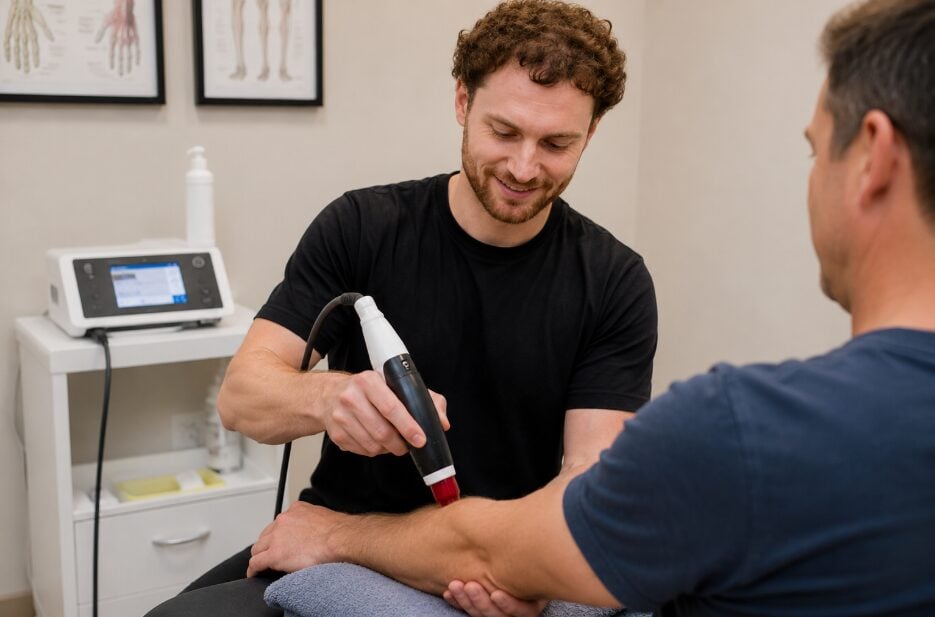
Depending on your presentation, treatment may include hands-on osteopathic care, progressive rehabilitation exercises, dry needling and radial shockwave therapy where appropriate.
More on Tennis Elbow?
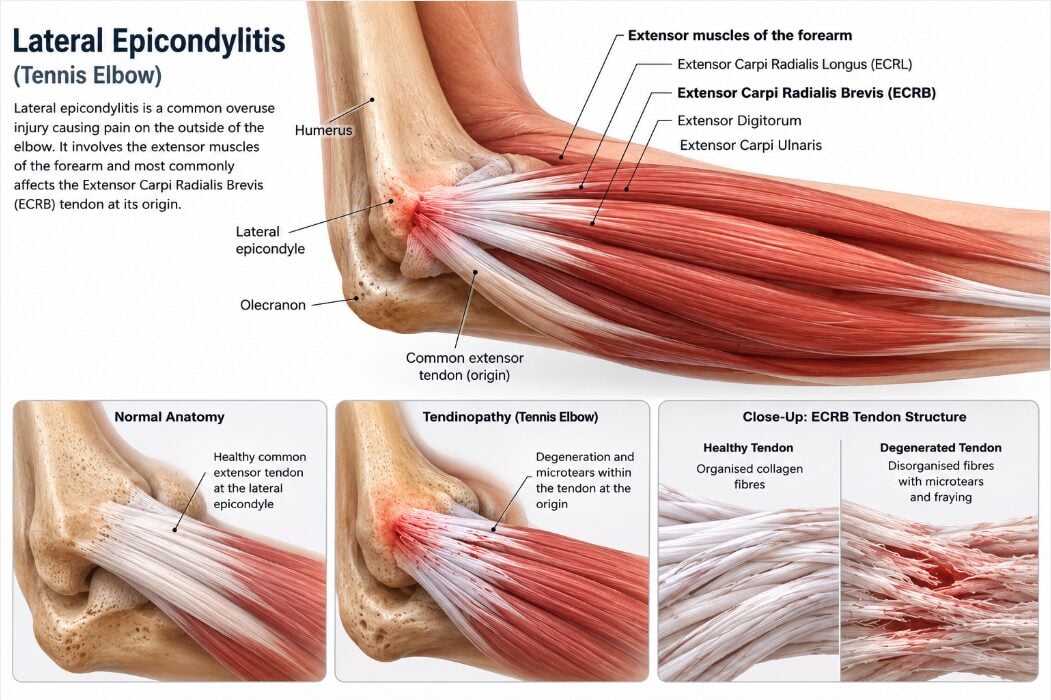
Tennis elbow, medically known as lateral epicondylitis, is one of the most common causes of pain on the outside of the elbow.
The condition affects the common extensor tendon, where the muscles responsible for extending your wrist and fingers attach to the lateral epicondyle which is the bony prominence on the outside of the elbow.
These muscles are heavily involved whenever you grip, lift, carry or use tools. If the tendon is repeatedly exposed to more load than it can comfortably tolerate, it can become painful and lose some of its ability to cope with everyday activities.
Although the name lateral epicondylitis is still widely recognised, research has shown that long-standing cases often involve changes within the tendon itself rather than ongoing inflammation. Because of this, terms such as lateral epicondylopathy or lateral elbow tendinopathy are becoming increasingly common.
.
What Causes Tennis Elbow?
Despite the name, most people I treat with tennis elbow have never played tennis.
Instead, the tendon usually becomes overloaded because it is repeatedly exposed to more force than it can comfortably tolerate.
Common contributing factors include:
- Repetitive gripping.
- Manual work.
- Weight training.
- Racquet sports.
- Gardening.
- Painting.
- Computer and mouse use.
- Sudden increases in activity.
- Returning to work or sport after a break.
One thing I’ve learnt over many years in practice is that people often overload the tendon in surprisingly similar ways.
Christmas Shopping Elbow
Every year around Christmas I seem to notice an increase in people presenting with tennis elbow. In fact, I sometimes jokingly refer to it as “Christmas Shopping Elbow.”
Imagine spending several hours walking around the shops carrying multiple heavy shopping bags. As fatigue sets in, your shoulders gradually roll forwards and your posture begins to slump.
The bags start brushing against the outside of your legs with every step.
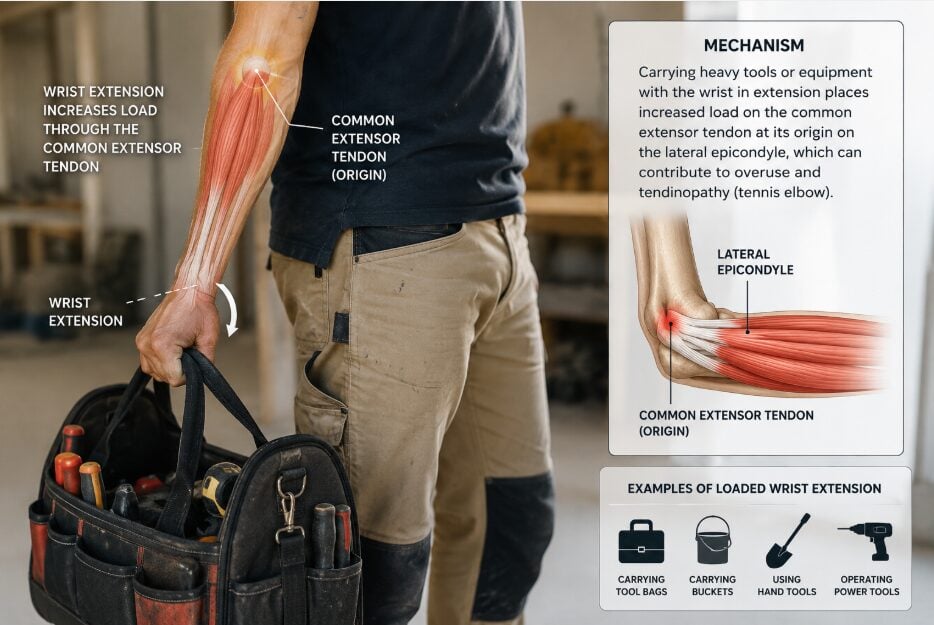
Rather than standing taller and drawing the shoulders back, many people instinctively extend their wrists to move the bags further away from their body. While it seems like a small adjustment, it significantly increases the load through the common extensor tendon on the outside of the elbow.
One afternoon of Christmas shopping probably won’t cause a problem on its own, but repeating this pattern over several shopping trips can eventually exceed what the tendon is capable of tolerating.
What Causes Tennis Elbow?
Despite the name, most people I treat with tennis elbow have never played tennis.
Instead, the tendon usually becomes overloaded because it is repeatedly exposed to more force than it can comfortably tolerate.
Common contributing factors include:
- Repetitive gripping.
- Manual work.
- Weight training.
- Racquet sports.
- Gardening.
- Painting.
- Computer and mouse use.
- Sudden increases in activity.
- Returning to work or sport after a break.
One thing I’ve learnt over many years in practice is that people often overload the tendon in surprisingly similar ways.
Christmas Shopping Elbow
Every year around Christmas I seem to notice an increase in people presenting with tennis elbow. In fact, I sometimes jokingly refer to it as “Christmas Shopping Elbow.”
Imagine spending several hours walking around the shops carrying multiple heavy shopping bags. As fatigue sets in, your shoulders gradually roll forwards and your posture begins to slump.
The bags start brushing against the outside of your legs with every step.
Rather than standing taller and drawing the shoulders back, many people instinctively extend their wrists to move the bags further away from their body. While it seems like a small adjustment, it significantly increases the load through the common extensor tendon on the outside of the elbow.
One afternoon of Christmas shopping probably won’t cause a problem on its own, but repeating this pattern over several shopping trips can eventually exceed what the tendon is capable of tolerating.
How is Tennis Elbow Treated?
Treatment depends on how long symptoms have been present, the severity of your pain and the activities contributing to the problem.
Your treatment plan may include:
- Education.
- Activity modification.
- Progressive strengthening exercises.
- Tendon loading programs.
- Hands-on osteopathic treatment.
- Soft tissue techniques.
- Joint mobilisation.
- Dry needling.
- Taping.
- Advice regarding work or sporting technique.
- Radial shockwave therapy where appropriate.
Our goal isn’t simply to reduce pain. We want to improve the tendon’s ability to tolerate everyday loads so you can confidently return to work, sport and the activities you enjoy.
Radial Shockwave Therapy for Tennis Elbow
For people with persistent tennis elbow that has not responded to initial conservative treatment, radial shockwave therapy may be considered as part of a broader rehabilitation program.
Current research suggests shockwave therapy may help reduce pain and improve function in selected patients, particularly when combined with an appropriate exercise program rather than used in isolation.
How Long Does Tennis Elbow Take to Heal?
Recovery varies depending on how long symptoms have been present and the activities contributing to the condition.
Many people begin noticing improvements within several weeks, while more persistent cases may require several months of progressive rehabilitation.
Like most tendon conditions, recovery is about more than simply reducing pain. It also involves rebuilding the tendon’s ability to tolerate load.
Why Does Tennis Elbow Keep Coming Back?
One of the biggest misconceptions is that once the pain settles, the tendon has fully recovered.
Pain often improves before the tendon has regained its previous strength and capacity.
Returning too quickly to heavy lifting, repetitive gripping or sport may simply overload the tendon again.
Our aim is to help you recover while also addressing the movement patterns, work habits and loading strategies that contributed to the problem in the first place.
Evidence-Informed Care
There is no single treatment that works for every person with tennis elbow.
Current evidence suggests the best outcomes are achieved by combining education, progressive strengthening, activity modification and, where appropriate, additional therapies such as manual therapy, dry needling or radial shockwave therapy.
At Gateway Osteopathy in Eltham, we combine current evidence with clinical experience to tailor treatment to the individual rather than applying the same approach to everyone.
Frequently Asked Questions
Should I completely rest my arm?
Usually not. While reducing aggravating activities can be helpful, complete rest often reduces the tendon’s capacity. A gradual rehabilitation program is generally more effective.
Will I need an MRI or ultrasound?
Most cases can be diagnosed through a thorough clinical examination. Imaging is usually only recommended if another diagnosis is suspected or symptoms are not progressing as expected.
Does shockwave therapy work?
Current evidence suggests radial shockwave therapy may help selected patients, particularly when combined with an appropriate rehabilitation program.
Can osteopathy help tennis elbow?
Osteopathy aims to reduce pain, improve movement and address contributing factors affecting the elbow, wrist, shoulder and neck while guiding an evidence-informed rehabilitation program.
References
Our treatment recommendations are informed by current clinical practice guidelines and peer-reviewed research, including:
- Coombes BK, Bisset L, Vicenzino B. Management of Lateral Elbow Tendinopathy.
- Cullinane FL, Boocock MG, Trevelyan FC. Is Eccentric Exercise an Effective Treatment for Lateral Epicondylitis?
- Stasinopoulos D, Johnson MI. Evidence-Based Physiotherapy Management of Lateral Elbow Tendinopathy.
- Contemporary research relating to tendon loading, rehabilitation and radial shockwave therapy.

Recent Comments