
Your Pelvic Floor: What Is It and Why Is It Important?
Author: Dr Stephanie Giddings (Osteopath)
Understanding your pelvic floor.
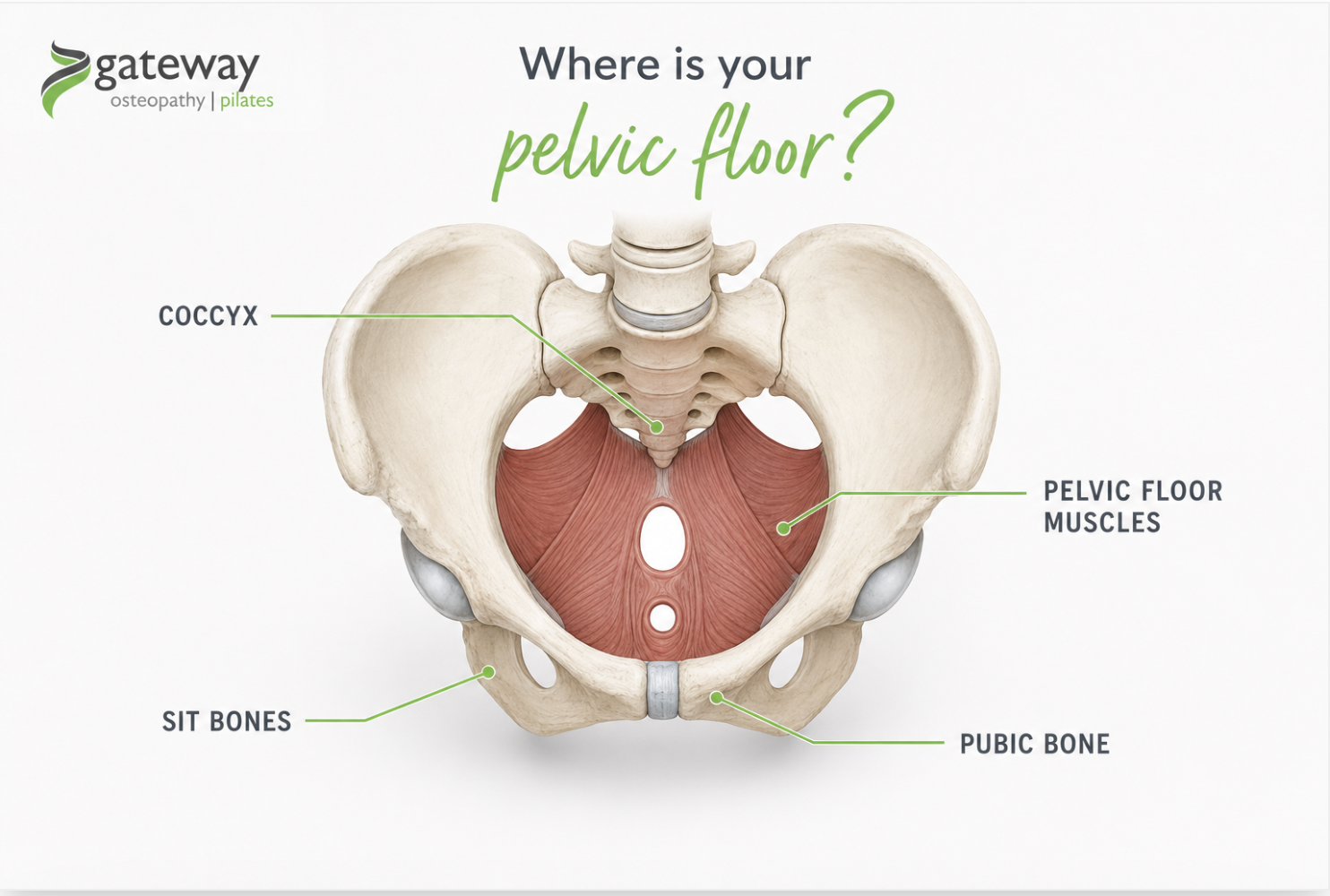
“The pelvic floor consists of muscles, ligaments and connective tissue that form a hammock-like sheet stretching between the pubic bone, the coccyx and the ischial tuberosities (commonly known as your sit bones).
Although we don’t necessarily think about our pelvic floor very often, it plays an important role in many everyday functions.
What does the Pelvic Floor Do?
The pelvic floor has many important functions, including:
- Supporting the bladder, bowel and pelvic organs.
- Helping with bowel and bladder control, allowing you to pass bowel and bladder movements or hold on until you reach a toilet, as well as helping to prevent leakage when you cough, sneeze, laugh or lift.
- Working with your deep abdominal muscles, back muscles and diaphragm to help manage intra-abdominal pressure and contribute to spinal stability.
- Contributing to sexual function and sensation.
- Assisting with blood flow and lymphatic drainage.
- Working in coordination with the diaphragm during breathing.
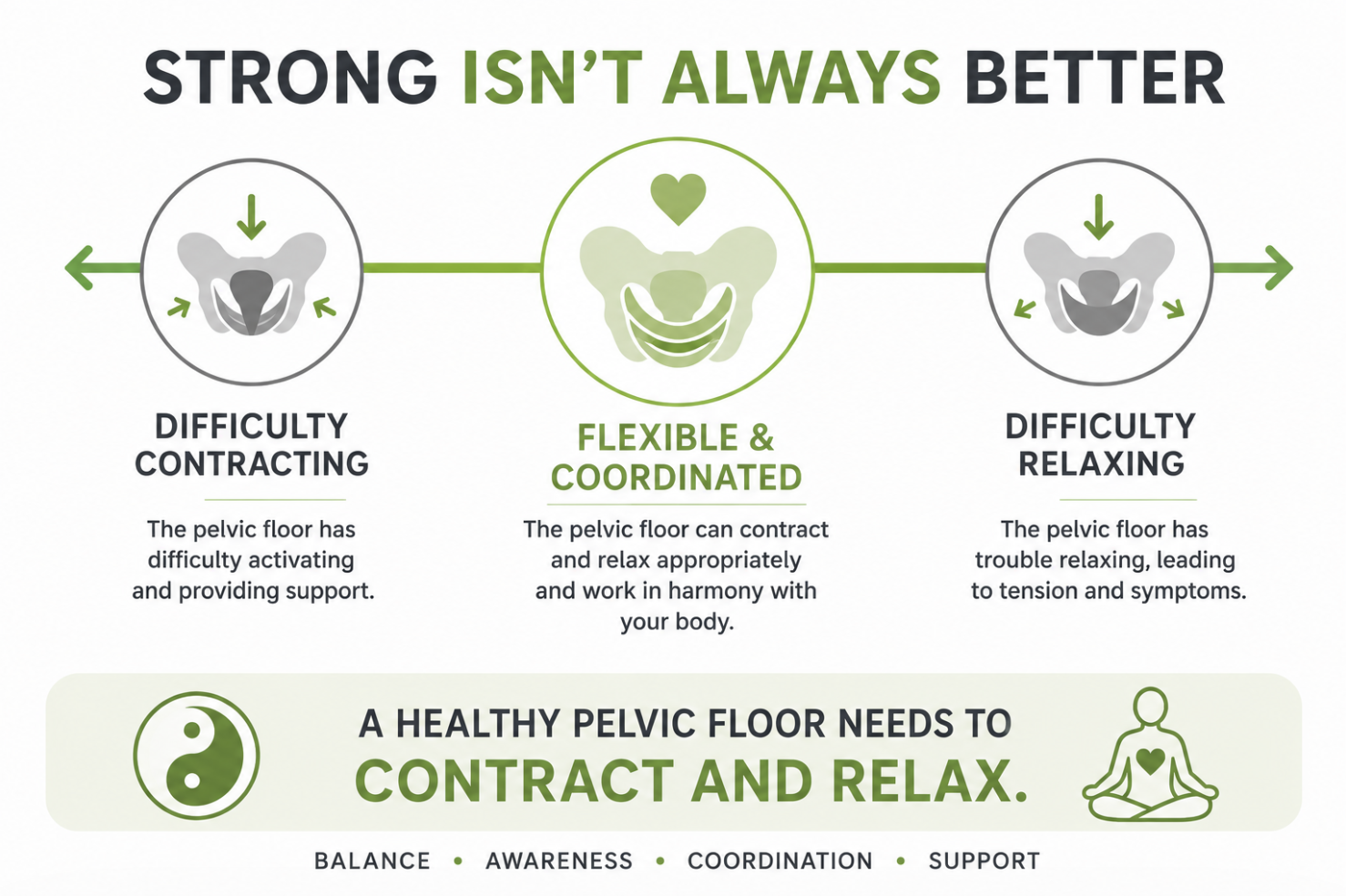
A healthy pelvic floor is flexible and responsive and moves in coordination with our breathing. It should be able to both relax and contract appropriately to meet the demands of different activities.
Pelvic health isn’t simply about strength
It is easy to assume that pelvic floor problems mean the muscles are weak and simply need to be strengthened. However, this isn’t always the case.
Sometimes pelvic floor muscles can be weak, while in other cases they may be overly tight, have difficulty relaxing, or may not coordinate effectively.
Good pelvic floor function therefore isn’t just about having strong muscles. Ideally, the muscles need to be able to contract, relax and coordinate effectively when required.
Common Signs of Pelvic Health Problems
Pelvic health problems can present in many different ways. Some common signs include:
- Leaking urine when coughing, sneezing, exercising or lifting.
- A sudden or frequent need to urinate.
- Difficulty emptying the bladder.
- Constipation or difficulty controlling bowel movements.
- A feeling of heaviness, pressure or bulging in the pelvis.
- Pelvic, abdominal or lower-back discomfort.
- Pain during sexual activity.
- Changes in bladder or bowel habits following pregnancy or surgery.
While these symptoms are common, they shouldn’t simply be dismissed as something you have to live with.
If you are experiencing any of these symptoms, seeking advice from an appropriately qualified health professional can help determine what may be contributing to them and what management may be appropriate.
How Can an Osteopath Help With Pelvic Health Issues?
Osteopathic assessment of pelvic health concerns is based on considering how different areas of the body may be contributing to an individual’s symptoms and function.
When assessing pelvic health, an osteopath may consider not only the pelvic floor itself but also relevant areas such as the lower back, pelvis, hips and diaphragm. Depending on the individual presentation, other areas of the musculoskeletal system may also be assessed to understand how movement, breathing, muscle function and load may be contributing to symptoms.
What happens during a pelvic health consultation?
During an osteopathic pelvic health consultation at Gateway Osteopathy, you can expect:
- A detailed history of your presenting complaint and relevant medical history.
- A physical examination, including an external examination of the pelvic floor where appropriate.
- Hands-on treatment where appropriate to address relevant areas of pain or restriction.
- A home exercise program specifically targeted to the findings from your assessment.
- Advice on simple strategies that may help improve pelvic health and function.
- Referral to other health professionals when necessary.
Assessment and treatment options will be discussed with you, and you will have the opportunity to ask questions and understand what is being recommended.
What Can I Do to Support My Pelvic Health?
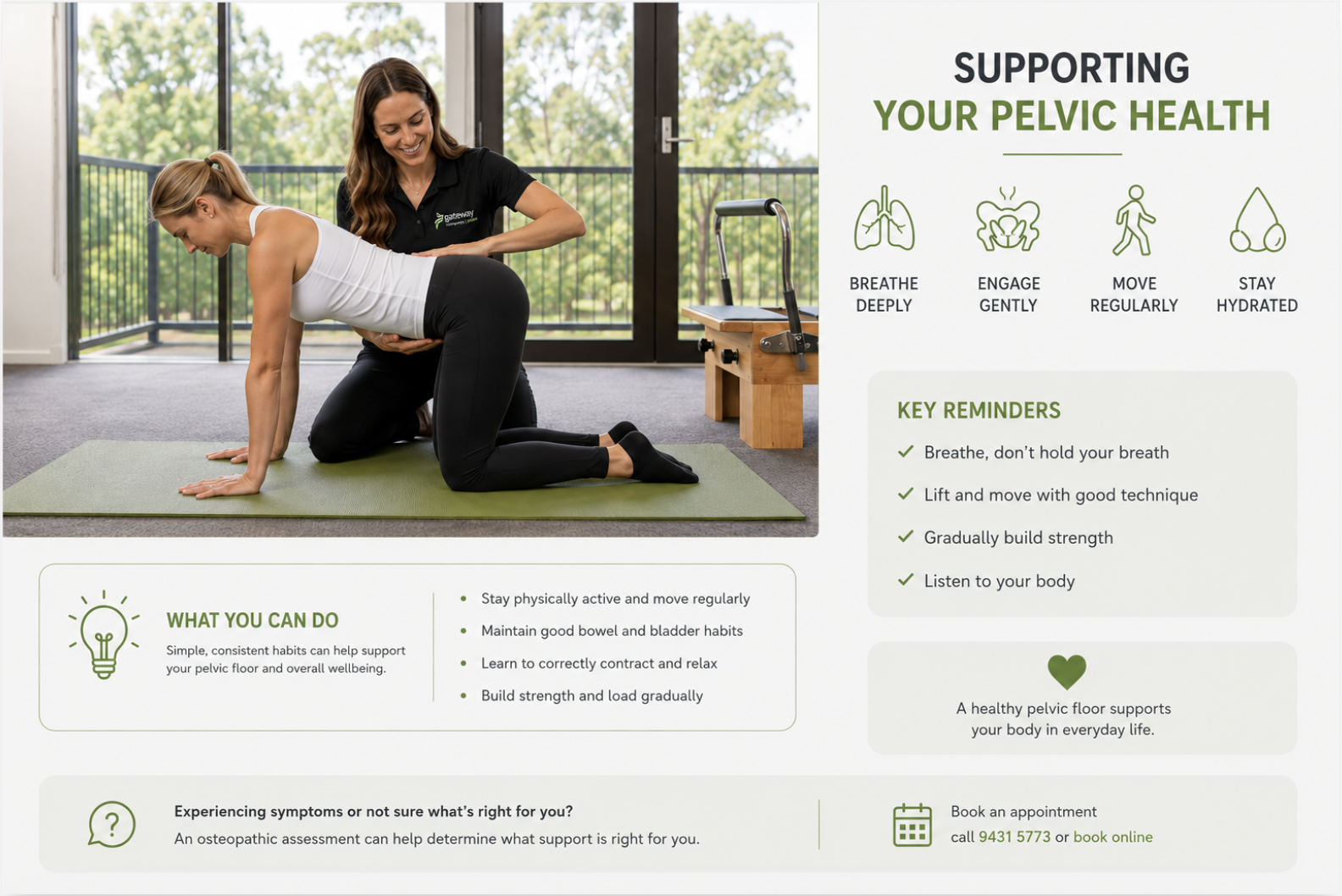
Looking after your pelvic floor doesn’t have to be complicated. Some simple things that may help include:
- Stay physically active and move regularly.
- Avoid regularly straining when opening your bowels.
- Maintain good bowel habits and address ongoing constipation.
- Learn how to correctly contract and relax your pelvic floor muscles.
- Breathe normally rather than routinely holding your breath during exercise and lifting.
- Gradually build strength and load rather than suddenly increasing activity.
- Pay attention to symptoms such as leaking, pelvic pain, heaviness or changes in bladder and bowel function.
When Should I Seek Help?
Pelvic health is an important part of overall health.
If you are experiencing bladder or bowel leakage, pelvic or lower-back pain, a feeling of heaviness or pressure, pain during sex, difficulty emptying your bladder or bowel, or you simply feel that something isn’t quite right, it may be worth seeking professional advice.
Remember, good pelvic health isn’t simply about strength. The pelvic floor needs to be able to contract, relax and coordinate effectively to respond to the different demands we place on our bodies.
A thorough assessment can help evaluate how your pelvic floor is functioning and determine what treatment, exercise, self-management strategies or referral may be appropriate for you.
Pelvic Health at Gateway Osteopathy
Stephanie Giddings is an osteopath at Gateway Osteopathy with a particular interest in pelvic health, pregnancy and postpartum care.
If you would like to discuss whether an osteopathic pelvic health assessment may be appropriate for you, call Gateway Osteopathy on 9431 5773 or book an appointment online.

Recent Comments