
Achilles Tendinopathy Treatment in Eltham
Achilles pain stopping you from walking, running or playing sport?
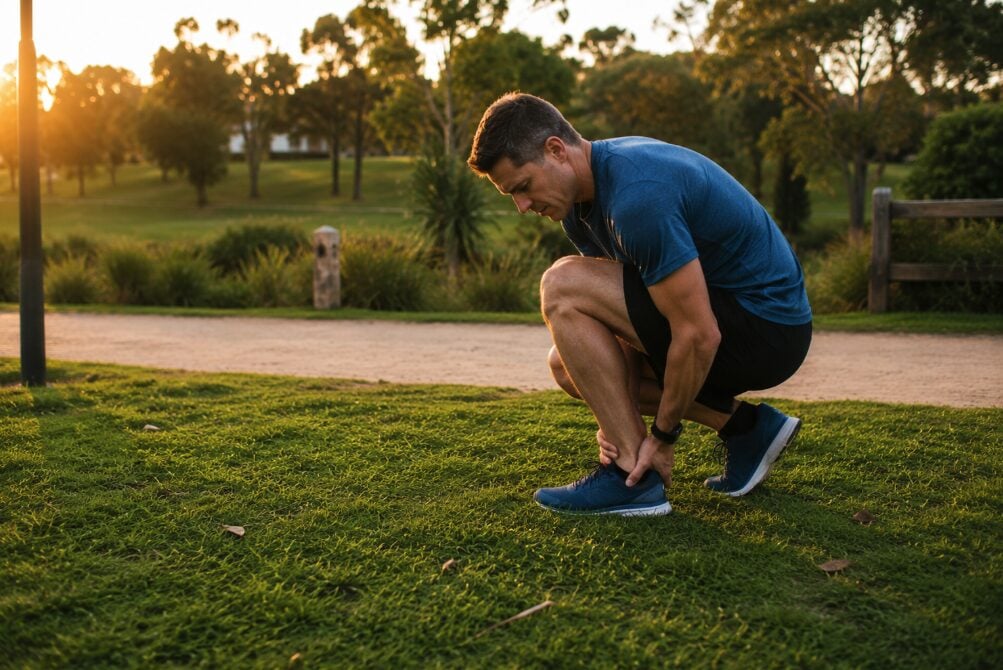
Achilles tendon pain can be frustrating. For some people it begins as a slight stiffness when getting out of bed in the morning. Others first notice it after a run, a long walk or a game of sport. In many cases, the pain gradually worsens until everyday activities such as climbing stairs, walking uphill or simply getting through a day’s work become uncomfortable.
One of the most confusing aspects of Achilles tendinopathy is that it often doesn’t seem to follow the rules. The tendon may feel stiff first thing in the morning, loosen up after a few minutes of walking, then become sore again later in the day. Some people can even complete a run reasonably comfortably, only to struggle getting out of bed the following morning.
At Gateway Osteopathy, we regularly assess and treat Achilles tendon pain in people from Eltham, Montmorency, Greensborough, Diamond Creek and the surrounding areas. We see everyone from recreational runners and competitive athletes to tradies, teachers, busy parents and retirees who simply want to keep enjoying an active lifestyle.
Our aim isn’t simply to reduce your pain.
We want to understand why your Achilles tendon became overloaded in the first place, identify the factors contributing to the problem and help you safely return to the activities that matter most to you.
Treatment may include education, activity modification, progressive strengthening, manual therapy, dry needling and shockwave therapy where appropriate. Every rehabilitation program is tailored to the individual rather than following a one-size-fits-all approach.
What is Achilles Tendinopathy?
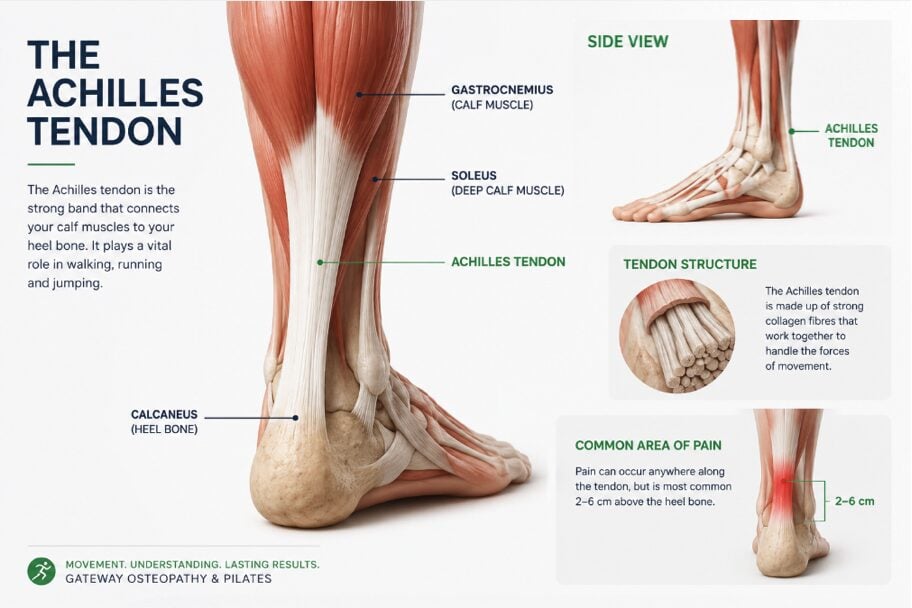
The Achilles tendon is the largest and strongest tendon in the human body.
It joins your calf muscles to your heel bone and is responsible for transferring enormous amounts of force every time you walk, climb stairs, run or jump. Despite being remarkably strong, the Achilles tendon is constantly adapting to the demands placed upon it.
When the tendon is exposed to regular, appropriate loading it generally becomes stronger and more resilient.
When the demands placed upon it exceed what it is currently capable of tolerating, the tendon can become painful.
Years ago this condition was commonly referred to as Achilles tendinitis, suggesting inflammation was the primary cause of the pain.
Our understanding has changed considerably over the past two decades.
While inflammation may play a role in the early stages of an injury, many ongoing Achilles problems involve changes within the tendon itself rather than persistent inflammation. This is why healthcare professionals now more commonly use the term Achilles tendinopathy.
Although that terminology has changed, the important message for patients remains reassuring.
An Achilles tendon is living tissue. It has the ability to adapt and become stronger again when it is exposed to the right type and amount of loading.
For most people, successful treatment isn’t about simply resting the tendon. It’s about gradually helping it regain its ability to cope with the demands of everyday life, work and sport.
What Does Achilles Tendinopathy Feel Like?
Symptoms vary from person to person, but commonly include:
- Pain or stiffness in the Achilles tendon, particularly first thing in the morning.
- Pain when beginning to walk after sitting for a period of time.
- Tenderness when pressing on the tendon.
- Pain during or after running, walking or sport.
- Discomfort climbing stairs or walking uphill.
- Thickening of the tendon.
- Reduced confidence when pushing off the affected leg.
- Symptoms that settle once you’ve been moving but return later in the day or the following morning.
Morning stiffness is one of the features we pay particular attention to during rehabilitation.
Many patients tell us they “hobble” to the bathroom when they first get out of bed, only to feel relatively normal ten or fifteen minutes later.
That temporary improvement doesn’t necessarily mean the tendon has recovered.
In fact, the level of morning stiffness often provides a better indication of how the tendon is coping than how it feels during activity itself. As rehabilitation progresses, many people notice the morning stiffness gradually becomes less severe and resolves more quickly.
Why Does Achilles Tendinopathy Develop?
One of the most common things I hear in the clinic is:
“I wasn’t doing anything unusual.”
When we look a little closer, that’s often true.
Perhaps you realised your train was about to leave and had to sprint along the platform at Eltham, Montmorency, Greensborough or Diamond Creek Station.
A father spends half an hour kicking the football with his children after months of mostly sitting behind a desk.
A mum decides it’s finally time to return to basketball after years away from the game.
Someone commits to getting healthier and starts a Couch to 5K running program.
None of these activities are unreasonable.
In many cases, they simply exposed a tendon that had quietly become less tolerant of those loads over time.
Life has a habit of getting in the way.
Work becomes busier.
Children become the priority.
Exercise becomes less frequent.
Without us really noticing, months, or sometimes years can pass without regularly exposing the Achilles tendon to the sort of forces it once managed comfortably.
Then one day we suddenly ask it to sprint, jump, hike or play sport as though nothing has changed.
The tendon simply isn’t prepared.
One of the biggest misconceptions is that the event itself caused the problem.
More often, the event simply revealed a reduction in the tendon’s ability to cope with that load.
The activity wasn’t unreasonable.
The tendon simply wasn’t ready for it.
Midportion vs Insertional Achilles Tendinopathy
Although both conditions affect the Achilles tendon, the location of your symptoms can influence your rehabilitation.
Midportion Achilles tendinopathy is the most common presentation. Pain is typically felt around two to six centimetres above the heel bone, where changes within the tendon most commonly occur.
Insertional Achilles tendinopathy affects the point where the tendon attaches to the heel bone. This type of Achilles pain may be aggravated by activities that place the ankle into greater dorsiflexion, such as walking uphill or allowing the heel to drop below the level of a step during exercise.
While the underlying principles of rehabilitation remain similar, the exercises and the way they are progressed may differ depending on which part of the tendon is involved.
For this reason, an accurate assessment is important before beginning a strengthening program.
What My Years in Practice Has Taught Me About Achilles Pain
One thing I’ve noticed after treating Achilles tendon problems for many years is that patients often remember the moment the pain started, but they rarely think about the months leading up to it.
They’ll tell me about sprinting for the train, a long walk on holidays, a game of social tennis or kicking the football with the kids.
Those moments are easy to remember because that’s when the pain became obvious.
What often goes unnoticed is that the tendon may have been gradually losing its conditioning long before that day arrived.
Our bodies are remarkably good at adapting when we continue asking them to do something.
They’re equally good at adapting when we stop.
As our activity levels change through work, family commitments, injury or simply getting older, the demands placed on the Achilles tendon often reduce as well. Over time, the tendon becomes less accustomed to handling higher loads.
Then one day we ask it to perform as though nothing has changed.
In many cases, the activity itself wasn’t excessive.
It simply exceeded what the tendon was prepared for at that point in time.
I think this is one of the most important concepts for people to understand because it also explains why recovery isn’t usually about finding a single treatment that “fixes” the tendon.
Successful rehabilitation is about gradually rebuilding the tendon’s ability to tolerate the activities that are important to you, whether that’s walking the dog around Eltham, returning to running, getting back onto the football field or simply being able to keep up with your children or grandchildren.
When people understand why the problem developed, they’re often much more confident throughout the rehabilitation process.
Because recovery isn’t simply about reducing pain.
It’s about rebuilding confidence in your tendon, restoring its strength and helping it cope with the demands of the life you want to live.
.
How We Assess Achilles Tendinopathy
Every Achilles tendon problem is slightly different.
Two people may have pain in a similar location, but the reason the tendon became overloaded, how long it has been present and the best rehabilitation strategy can vary considerably.
That’s why treatment should always begin with a thorough assessment rather than simply selecting exercises from a standard program.
During your consultation we’ll discuss questions such as:
- When did the pain first begin?
- Did it develop gradually or after a particular activity?
- Is the pain worse first thing in the morning?
- Has your training or activity level changed recently?
- What activities are you hoping to return to?
- Have you had previous tendon injuries?
We then examine the tendon itself, looking at:
- The location of your symptoms.
- Areas of tenderness.
- Thickening of the tendon.
- Calf strength.
- Single leg calf raises.
- Walking and running mechanics where appropriate.
- Ankle movement and calf flexibility.
- Factors elsewhere in the kinetic chain that may be contributing to increased load through the Achilles tendon.
Just as importantly, we’ll also discuss your goals.
Someone hoping to walk comfortably around the neighbourhood has very different rehabilitation requirements to someone preparing for a marathon or returning to competitive football.
Understanding what you want to achieve helps guide the rehabilitation process.
Do I Need a Scan?
One of the most common questions we hear is:
“Do I need an ultrasound or MRI?”
The answer is not always.
Achilles tendinopathy can often be diagnosed from a detailed history and physical examination without requiring imaging.
In fact, research has shown that many people have changes within their Achilles tendon on ultrasound or MRI despite having little or no pain at all.
Likewise, someone with significant pain may only have relatively minor changes visible on imaging.
For this reason, scans should always be interpreted alongside your symptoms and clinical examination rather than in isolation.
If your presentation is straightforward, imaging may not change the way your condition is managed.
However, a scan may be recommended if:
- The diagnosis is unclear.
- We suspect a partial tear or rupture.
- Symptoms are not progressing as expected.
- Surgery is being considered.
- There are other concerns that require further investigation.
When imaging is required, an ultrasound is often an excellent first investigation. It provides good visualisation of the tendon and can identify tendon thickening, degeneration and partial tears.
MRI may occasionally be recommended in more complex cases where additional detail is required.
One of the principles we strongly believe in at Gateway Osteopathy is simple:
We treat people – not scans.
Your symptoms, your examination findings and your goals will always guide treatment more than the appearance of your MRI or ultrasound.
How Is Achilles Tendinopathy Treated?
Modern treatment for Achilles tendinopathy has changed considerably over the past twenty years.
While rest was once commonly recommended, we now know that prolonged rest alone rarely restores a tendon’s ability to tolerate everyday activities.
Instead, treatment focuses on helping the tendon gradually adapt to load again while avoiding activities that continue to excessively aggravate it.
Your treatment plan may include a combination of:
- Education about your condition.
- Temporary modification of aggravating activities.
- Progressive strengthening exercises.
- Manual therapy where appropriate.
- Dry needling for associated muscle tightness where appropriate.
- Shockwave therapy in selected cases.
- Advice regarding footwear and training progression.
- Guidance on returning to work, running or sport.
No single treatment works for every person.
Instead, we combine the treatments most appropriate to your individual presentation while monitoring your progress over time.
Recovery is rarely about finding a miracle treatment.
More often, it’s about consistently making the right decisions over a period of weeks and months while gradually rebuilding the tendon’s ability to tolerate increasing demands.
Shockwave Therapy for Achilles Tendinopathy
Shockwave therapy has become an increasingly recognised treatment option for persistent Achilles tendinopathy.
It involves delivering acoustic pressure waves into the affected tissues and is thought to stimulate biological processes involved in tendon healing and pain reduction.
Current research suggests that shockwave therapy may improve pain and function in selected patients, particularly when symptoms have persisted despite an appropriate rehabilitation program.
Like all treatments, however, shockwave therapy isn’t a magic cure.
We don’t recommend it simply because someone has Achilles pain.
Instead, we consider whether it is likely to add value alongside an appropriate strengthening program and your overall rehabilitation plan.
At Gateway Osteopathy, shockwave therapy is used as one component of a comprehensive treatment approach rather than a stand-alone solution.
For many patients, the combination of education, progressive strengthening and carefully selected adjunctive treatments provides the best opportunity for long-term improvement.
Returning to Running and Sport
One of the biggest mistakes people make is assuming that because the pain has settled, the tendon has completely recovered.
Pain often improves before the tendon has fully regained its ability to cope with higher loads.
Returning too quickly can result in symptoms flaring again, creating the impression that the injury has “come back.”
A successful return to running or sport is usually gradual.
This often involves progressively increasing walking, jogging, running, jumping or sport-specific activities while monitoring how the tendon responds over the following 24 hours.
Some mild discomfort during rehabilitation isn’t necessarily a sign that damage is occurring.
In many cases, the more important question is:
How does the tendon feel the next morning?
If symptoms settle quickly and morning stiffness remains stable or continues improving, the tendon is often tolerating the rehabilitation well.
If pain progressively worsens or morning stiffness increases significantly, it may simply indicate that the tendon wasn’t quite ready for that amount of loading yet.
Learning to interpret these responses is an important part of successful rehabilitation and something we work closely with our patients to understand.
How Long Does Recovery Take?
One of the first questions most people ask is:
“How long before it gets better?”
Unfortunately, there isn’t a simple answer.
Recovery depends on a number of factors, including:
- How long symptoms have been present.
- The severity of the tendinopathy.
- Your overall health.
- Previous activity levels.
- How consistently rehabilitation is followed.
- The physical demands of your work or sport.
Some people notice meaningful improvement within a few weeks.
For others, particularly if symptoms have been present for many months, rehabilitation may take several months.
That can feel frustrating.
However, it’s important to remember that tendons generally adapt more slowly than muscles.
Meaningful improvements usually occur gradually rather than overnight.
One of the most encouraging things we see in practice is that even longstanding Achilles tendinopathy can often improve significantly when the underlying reasons for the problem are addressed and rehabilitation is progressed appropriately.
Why Does Achilles Tendinopathy Keep Coming Back?
Perhaps the most frustrating part of Achilles tendinopathy isn’t the pain itself.
It’s getting better, returning to your normal activities, then finding the pain gradually creeping back a few weeks or months later.
Over the years, I’ve noticed that many recurring Achilles problems have one thing in common.
People often stop rehabilitating the tendon as soon as it starts feeling better.
That’s completely understandable.
When you’re no longer limping, the morning stiffness has settled and you’re back walking comfortably, it’s natural to assume the tendon has recovered.
Unfortunately, pain often settles before the tendon has fully regained its ability to cope with higher levels of activity.
If training loads increase more quickly than the tendon has adapted, symptoms can return.
Sometimes the trigger is obvious.
Returning to running too quickly.
A hiking holiday.
A busy week at work involving more walking than usual.
Starting preseason training after months away from sport.
Other times there isn’t an obvious trigger at all.
Life simply becomes busy again.
Strength exercises become less frequent.
Activity gradually changes.
Over time, the tendon’s ability to cope with load reduces once again.
One of the goals of rehabilitation isn’t simply to reduce your pain today.
It’s to improve the tendon’s ability to tolerate the activities that are important to you over the long term.
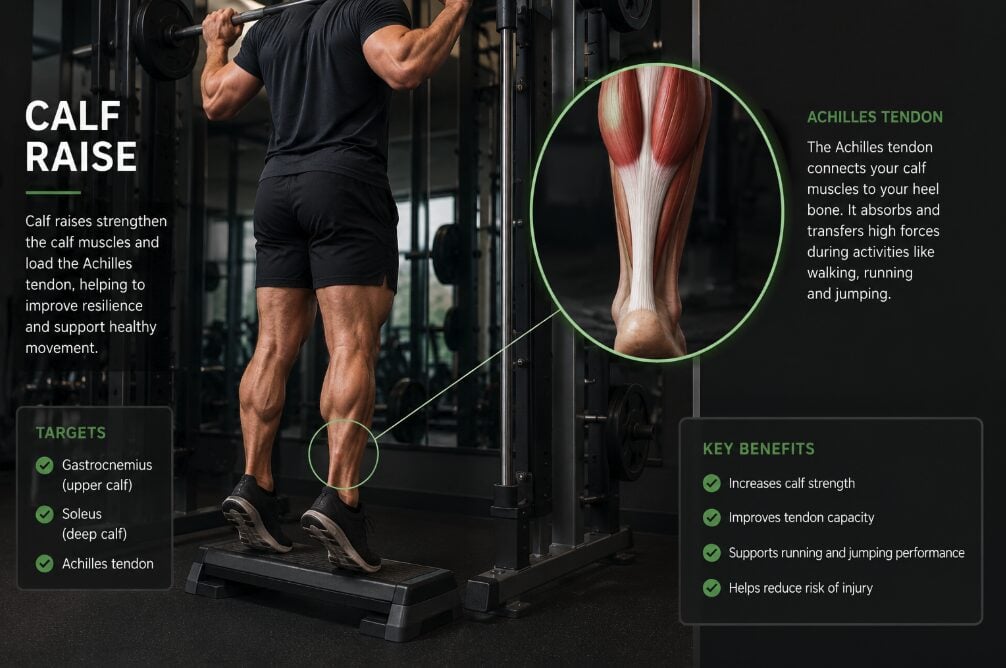
For many people, maintaining some level of calf strengthening after their symptoms have resolved becomes just as important as the rehabilitation that got them better in the first place.
Rather than thinking about rehabilitation as something you stop once the pain disappears, it’s often more helpful to think of it as investing in the long-term health of your tendon.
Frequently Asked Questions
Should I stop walking if my Achilles hurts?
Not necessarily.
Completely avoiding activity is rarely the answer. In many cases, modifying your activity while beginning an appropriate strengthening program is more beneficial than prolonged rest.
The right balance depends on how irritable your tendon is and what activities are provoking your symptoms.
Can I keep running?
Sometimes.
For some people, reducing running volume or intensity is enough while rehabilitation progresses. Others may need a temporary break from running before gradually returning.
The decision depends on your symptoms, your goals and how the tendon responds over the following 24 hours.
Should I stretch my calf muscles?
Stretching can be helpful in some situations, particularly where reduced ankle mobility or calf tightness is contributing to increased tendon loading.
However, stretching alone is unlikely to resolve Achilles tendinopathy.
Progressive strengthening usually forms the foundation of rehabilitation.
Is Achilles tendinopathy the same as Achilles tendinitis?
Not quite.
The term Achilles tendinitis suggests inflammation is the primary problem.
Current research shows that many persistent Achilles problems involve changes within the tendon itself rather than ongoing inflammation, which is why the term Achilles tendinopathy is now more commonly used.
Will I need shockwave therapy?
Not everyone does.
Shockwave therapy can be a useful treatment option for some people, particularly when symptoms have been present for some time or progress has stalled.
Like any treatment, it works best when combined with an appropriate rehabilitation program rather than being used on its own.
Will I need surgery?
Fortunately, most people with Achilles tendinopathy improve with conservative management.
Surgery is generally considered only after an appropriate period of well-managed rehabilitation has failed to produce sufficient improvement.
Can Achilles tendinopathy heal completely?
Many people return to walking, running and sport without ongoing limitations.
The key is allowing the tendon enough time to adapt and ensuring rehabilitation continues long enough to rebuild its ability to tolerate higher loads.
Is morning stiffness normal?
Yes.
Morning stiffness is one of the most common features of Achilles tendinopathy.
During rehabilitation, we’re often less interested in whether you experienced some discomfort and more interested in whether the morning stiffness is gradually becoming less severe over time.
References
The recommendations within this article are based on current evidence and contemporary approaches to tendon rehabilitation, including guidance from:
- Malliaras P, Barton CJ, Reeves ND & Langberg H. Achilles and patellar tendinopathy loading programmes.
- Silbernagel KG and colleagues – Achilles tendon rehabilitation research.
- Journal of Orthopaedic & Sports Physical Therapy (JOSPT).
- British Journal of Sports Medicine (BJSM).
- National Institute for Health and Care Excellence (NICE) guidance where applicable.
- Current systematic reviews relating to exercise therapy and extracorporeal shockwave therapy for Achilles tendinopathy.
Still Struggling With Achilles Pain?
Whether your Achilles pain has been present for a few weeks or has been frustrating you for months, the good news is that many people improve with an accurate diagnosis and a rehabilitation program that matches their goals and lifestyle.
At Gateway Osteopathy, we take the time to understand not only where your pain is, but why it developed and what you need your body to be capable of doing again.
Whether that’s returning to running, keeping up with your children or grandchildren, getting through a day’s work comfortably or preparing for your next sporting event, our aim is to help you return with confidence.
If you’re experiencing persistent Achilles pain and would like an assessment, we’d be happy to help.
Recent Comments