

Plantar Fasciitis Treatment in Eltham
What is Plantar Fasciitis?
Heel pain that makes those first few steps in the morning unbearable?
Plantar fasciitis is one of the most common causes of heel pain. Whether your symptoms started after increasing your walking, running, standing for long hours at work or seemingly out of nowhere, persistent heel pain can make everyday activities frustrating.
At Gateway Osteopathy in Eltham, our osteopaths take the time to identify the factors contributing to your symptoms and develop an individual treatment plan. Depending on your presentation, treatment may include hands-on osteopathic care, rehabilitation exercises, dry needling and radial shockwave therapy where appropriate.
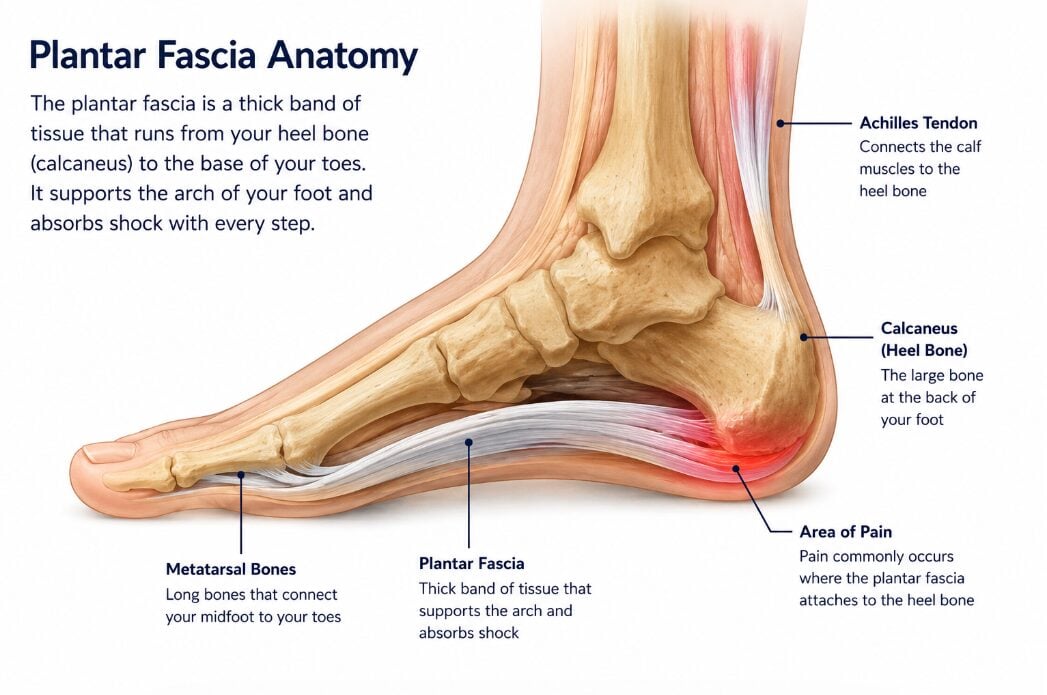
The plantar fascia is a thick band of connective tissue that runs from the heel bone to the base of your toes. It helps support the arch of your foot and absorbs the forces placed through your foot every time you walk, run or stand.
Despite the name, plantar fasciitis isn’t always caused by ongoing inflammation. In many people with long-standing heel pain, the tissue has undergone changes associated with repeated loading rather than active inflammation. For this reason, healthcare professionals may also use the term plantar fasciopathy.
Regardless of the name, the result is the same – pain around the heel that can make everyday activities uncomfortable.
What Does Plantar Fasciitis Feel Like?
People describe plantar fasciitis in different ways, but common symptoms include:
- Sharp pain under or around the heel.
- Pain that’s worst with the first few steps in the morning.
- Heel pain after sitting for prolonged periods.
- Pain that gradually eases as you walk, before returning later in the day.
- Increased discomfort after long periods of standing or walking.
- Tenderness when pressing on the inside of the heel.
Some people notice symptoms developing gradually over weeks or months, while others find the pain starts after a sudden increase in activity or following a change in footwear or work demands.
Evidence-Informed Care
At Gateway Osteopathy, we believe patients deserve treatment recommendations based on the best available evidence, combined with clinical experience and an understanding of your individual goals.
Current research suggests that no single treatment is appropriate for everyone with plantar fasciitis. Instead, the best outcomes are often achieved through an individualised management plan that may include education, exercise rehabilitation, manual therapy, activity modification, footwear advice and, where appropriate, radial shockwave therapy.
Our osteopaths stay up to date with current clinical practice guidelines and emerging research to help ensure your treatment plan reflects the latest evidence while remaining tailored to your specific needs.
References
Our approach to assessing and managing plantar fasciitis is informed by the following clinical practice guidelines and peer-reviewed research.
Clinical Practice Guideline
- Martin RL, Davenport TE, Reischl SF, et al. Heel Pain – Plantar Fasciitis: Revision 2023 Clinical Practice Guideline. Journal of Orthopaedic & Sports Physical Therapy. 2023;53(12):CPG1–CPG39.
https://www.jospt.org/doi/10.2519/jospt.2023.0303
Key Research
- Lemont H, Ammirati KM, Usen N. Plantar Fasciitis: A Degenerative Process (Fasciosis) Without Inflammation. Journal of the American Podiatric Medical Association. 2003.
- Rathleff MS, Molgaard CM, Fredberg U, et al. High-load Strength Training Improves Outcome in Patients with Plantar Fasciitis: A Randomised Controlled Trial. Scandinavian Journal of Medicine & Science in Sports. 2015.
- Whittaker GA, Munteanu SE, Menz HB, et al. Foot Orthoses for Plantar Heel Pain: A Systematic Review and Meta-analysis. British Journal of Sports Medicine. 2018.
- Babatunde OO, Legha A, Littlewood C, et al. Comparative Effectiveness of Treatment Options for Plantar Heel Pain: A Systematic Review with Network Meta-analysis. British Journal of Sports Medicine. 2019.
Recent Comments