
Understanding Neck Pain
Neck pain is common, but it’s rarely simple
Most people experience neck pain at some stage of their lives.
Sometimes it develops after sleeping awkwardly or spending too many hours at a computer. Sometimes it follows a sporting injury or a motor vehicle accident. Other times it seems to appear for no obvious reason at all.
One thing we’ve learnt over the years is that while neck pain is common, every person’s experience is different.
For one person it might simply be stiffness when checking their blind spot while driving.
For another it may interfere with work, sleep or looking after their children.
Understanding why your neck hurts is important, but understanding how it’s affecting your life is just as important.
What actually causes neck pain?
The neck is an incredibly complex part of the body.
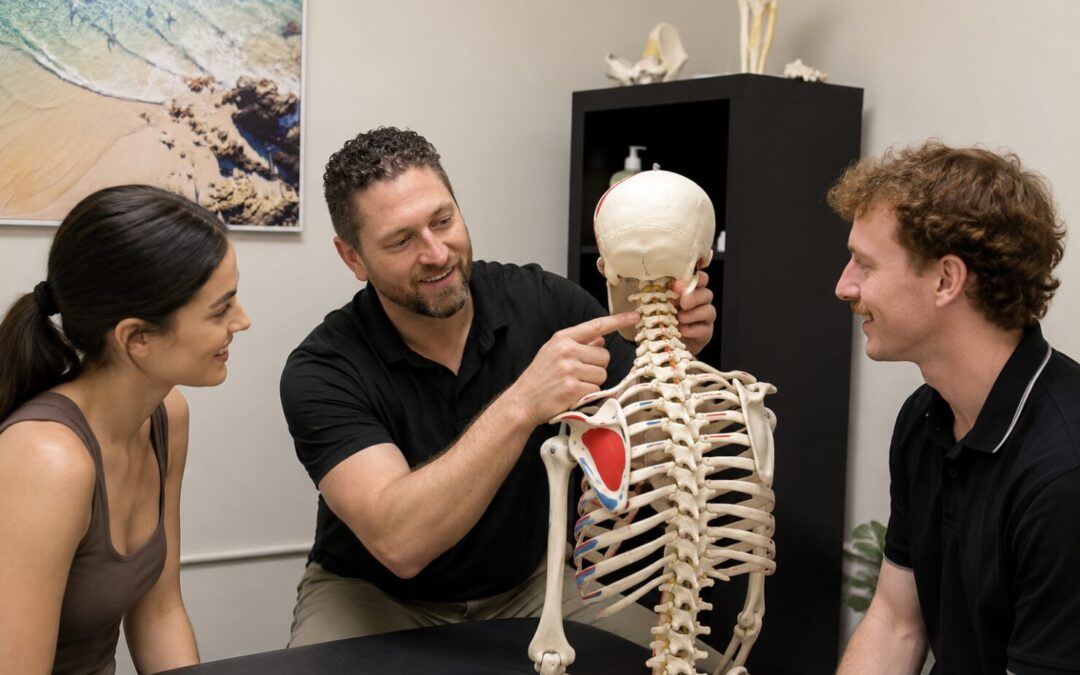
It contains seven vertebrae, intervertebral discs, facet joints, muscles, ligaments, nerves and blood vessels, all working together to provide both stability and remarkable freedom of movement.
Pain can arise from one structure or, more commonly, from several structures becoming irritated together.
Some common contributors include:
- Muscle strain and tension
- Joint irritation or stiffness
- Whiplash injuries
- Disc injuries
- Age-related changes
- Headaches originating from the neck
- Sustained postures at work
- Reduced physical activity
- Stress and muscle guarding
Often there isn’t a single structure we can point to with certainty.
That might sound frustrating, but it’s actually very common.
“My MRI says I have degeneration…”
One of the most common questions we hear is:
“My scan shows degeneration. Is that why my neck hurts?”
The answer isn’t always straightforward.
As we get older it’s completely normal for our necks to change.
Discs gradually lose water content.
Joints develop wear and tear.
Small bony spurs can form.
These changes sound alarming when written in a radiology report, but research consistently shows that many people with these findings have little or no neck pain at all.
Scans are valuable when they’re needed, but they only tell part of the story.
A scan helps us understand what’s happening anatomically.
It doesn’t tell us how your neck moves.
It doesn’t tell us how confident you feel using it.
And it doesn’t tell us how your symptoms are affecting your day-to-day life.
That’s why a thorough clinical assessment remains so important.
Do I need imaging?
Most episodes of neck pain don’t require an X-ray or MRI.
Current clinical guidelines recommend imaging only when it’s likely to change management or when there are signs suggesting something more serious.
During your assessment we’ll ask questions and perform an examination to determine whether further investigation is appropriate.
If we think imaging or referral is necessary, we’ll discuss that with you.
When should neck pain be assessed urgently?
Although the vast majority of neck pain isn’t caused by anything serious, there are situations where prompt medical assessment is important.
These include:
- Significant trauma
- Progressive weakness in the arms or legs
- Difficulty walking or problems with balance
- Changes in bowel or bladder function
- Loss of hand coordination
- Unexplained weight loss or fever
- A history of cancer together with new, unexplained neck pain
- Severe, sudden neck pain unlike anything you’ve experienced before
If you’re experiencing any of these symptoms, you should seek urgent medical assessment.
How can osteopathy help?
Our role isn’t simply to treat your neck.
It’s to understand why your symptoms developed, identify the factors contributing to them and help you move forward with confidence.
Treatment may include:
- Hands-on manual therapy where appropriate
- Advice about movement and activity
- Individualised exercises
- Dry needling (with practitioners who offer it)
- Education about pain and recovery
- Strategies to improve strength, mobility and confidence
Not everyone needs the same treatment.
We’ll work with you to develop a plan based on your goals, your lifestyle and the findings from your assessment.
Will I need to stop moving?
Usually not.
Many people become worried they’ll make things worse by moving their neck.
In reality, gentle movement is often one of the most helpful things you can do.
Exactly what that movement looks like depends on your condition and stage of recovery.
Part of our job is helping you understand what you can safely do, rather than simply telling you what to avoid.
Looking beyond the neck
One thing we’ve learnt over the years is that neck pain isn’t always just about the neck.
Sleep.
Stress.
Work demands.
Physical activity.
Previous injuries.
General health.
All of these can influence how your neck feels and how quickly it recovers.
That’s why every assessment at Gateway begins by understanding you as a person, not just your symptoms.
Frequently Asked Questions
Should I crack my own neck?
Many people do, and for most it isn’t harmful when done occasionally. However, repeatedly forcing your neck to click doesn’t address the underlying reason it feels stiff and may become a habit that provides only short-term relief.
Is poor posture causing my neck pain?
Not necessarily.
There is surprisingly little evidence that one “perfect” posture prevents neck pain.
More often, necks become sore because they’ve stayed in one position for too long.
Your best posture is usually your next posture.
Changing positions regularly and staying active is often more helpful than trying to sit perfectly.
How long does neck pain take to improve?
This depends on the cause and the individual.
Many simple episodes improve over several weeks.
Long-standing or recurrent neck pain often benefits from addressing the contributing factors rather than simply waiting for it to settle.
We understand conditions. We treat people.
At Gateway, we know that neck pain affects more than muscles and joints.
It affects your work.
Your sleep.
Your confidence.
Your ability to exercise.
Your enjoyment of everyday life.
Our aim is to understand not only what’s contributing to your neck pain, but what getting better means to you.
Because while every neck is different…
every person is too.
Recent Comments