We Understand Conditions. We Treat People.
By Dr Stuart Robbins (Osteopath)
People often come to see us carrying a diagnosis.
It might be a disc bulge, arthritis, tennis elbow, frozen shoulder or migraines. Sometimes they’ve had an MRI, sometimes they’ve seen several health professionals already and occasionally they’ve spent hours researching online trying to work out what’s wrong.
A diagnosis is important. It helps us understand what may be contributing to someone’s pain and guides many of the decisions we make together. But over the years I’ve realised that a diagnosis is only the starting point.
The person sitting in front of me is always far more interesting than the words written on a scan report.
The same diagnosis rarely means the same thing
One of the things I enjoy most about osteopathy is that no two people are ever quite the same.
I’ve treated people with almost identical MRI findings who have completely different experiences. One person might continue working, playing golf and looking after their grandchildren with very little discomfort. Another might be struggling to sleep, worried about their future and wondering whether they’ll ever get back to the activities they enjoy.
The scan might look similar, but the person never is.
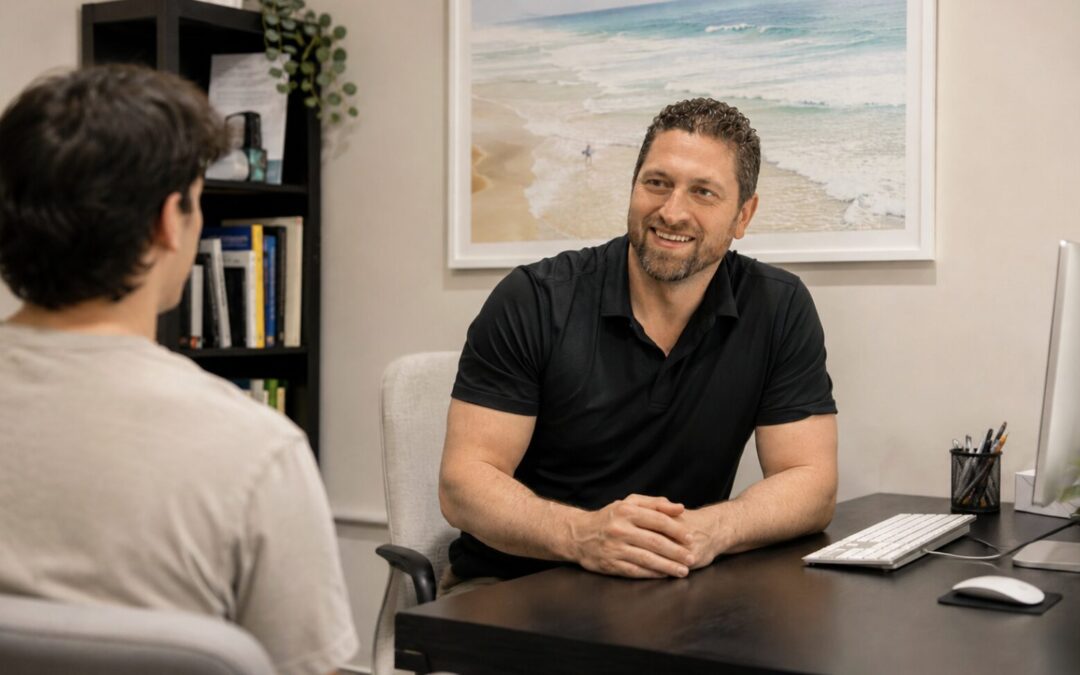
That’s why our consultations are not just about finding the painful structure. We spend time understanding what your symptoms mean to you, what you’re trying to get back to and what concerns you most. That conversation is often just as important as the physical examination.
Becoming the patient
Like many health professionals, I’d spent years helping people recover from injuries before I experienced one that significantly changed my own life.
A lumbar disc injury eventually led to surgery and a long rehabilitation. Suddenly I found myself sitting on the other side of the consultation room.
I understood what it was like to question every ache, to wonder whether I was improving quickly enough and to have good days followed by frustrating setbacks. I also realised how easy it is for someone to feel that their pain or injury has become their identity.
That experience didn’t change the science behind what I do, but it changed how I listen.
I became more interested in understanding what people were worried about rather than simply what hurt. I found myself asking different questions and taking more time to explain why recovery isn’t always a straight line.
Perhaps most importantly, it reinforced something I’d always believed but hadn’t fully appreciated until I experienced it myself. People don’t come to an Osteopath because they have an injury or condition, they come because they want their life back.
Passing that lesson on
As our team has grown, I’ve found myself repeating the same sentence to our newer practitioners.
“We understand conditions. We treat people.”
It’s something I now say regularly when mentoring Isaac and Elodie because I think it’s one of the most important lessons any clinician can learn.
Early in your career it’s very easy to become fascinated by anatomy, pathology and imaging. Those things matter, and they should. Understanding the human body is fundamental to being a good osteopath.
But none of that replaces genuinely listening to the person in front of you.
Looking back, I think this philosophy was probably first introduced to me as a student. I can’t honestly remember exactly where I first heard those words, but they stayed with me. Over the years I was fortunate to work alongside clinicians like Bruce Duncan, who consistently demonstrated that good healthcare begins with understanding people, not simply treating pathology.
Now I find myself passing that same lesson on to the next generation.
What this means for our patients
When someone walks through our doors, we don’t see them as a neck pain, a sore shoulder or a disc bulge.
We see someone who has work to get back to, children to pick up from school, sport they miss playing or simply a desire to move without constantly thinking about pain.
Sometimes treatment involves hands-on techniques. Sometimes it’s exercise. Sometimes it’s education or reassurance. Often it’s a combination of all three.
The specific approach is less important than making sure it’s appropriate for the person sitting in front of us.
That’s why two people with the same diagnosis may leave with completely different management plans.
Why this philosophy matters
Healthcare continues to evolve, and that’s a good thing. We understand far more about pain, rehabilitation and recovery than we did twenty years ago, and we continue to learn every year.
But despite all those advances, one thing hasn’t changed.
People still want to feel heard.
They want someone to explain what’s happening in language they understand. They want honest advice, realistic expectations and a plan that fits their life rather than a textbook.
That’s the philosophy we’ve tried to build Gateway Osteopathy around.
Understanding the condition is essential.
Understanding the person is what allows us to help.
Recent Comments