Understanding Neck Pain

Understanding Neck Pain

Understanding Neck Pain

Neck pain is common, but it’s rarely simple

Most people experience neck pain at some stage of their lives.

Sometimes it develops after sleeping awkwardly or spending too many hours at a computer. Sometimes it follows a sporting injury or a motor vehicle accident. Other times it seems to appear for no obvious reason at all.

One thing we’ve learnt over the years is that while neck pain is common, every person’s experience is different.

For one person it might simply be stiffness when checking their blind spot while driving.

For another it may interfere with work, sleep or looking after their children.

Understanding why your neck hurts is important, but understanding how it’s affecting your life is just as important.


What actually causes neck pain?

The neck is an incredibly complex part of the body.

It contains seven vertebrae, intervertebral discs, facet joints, muscles, ligaments, nerves and blood vessels, all working together to provide both stability and remarkable freedom of movement.

Pain can arise from one structure or, more commonly, from several structures becoming irritated together.

Some common contributors include:

  • Muscle strain and tension
  • Joint irritation or stiffness
  • Whiplash injuries
  • Disc injuries
  • Age-related changes
  • Headaches originating from the neck
  • Sustained postures at work
  • Reduced physical activity
  • Stress and muscle guarding

Often there isn’t a single structure we can point to with certainty.

That might sound frustrating, but it’s actually very common.


“My MRI says I have degeneration…”

One of the most common questions we hear is:

“My scan shows degeneration. Is that why my neck hurts?”

The answer isn’t always straightforward.

As we get older it’s completely normal for our necks to change.

Discs gradually lose water content.

Joints develop wear and tear.

Small bony spurs can form.

These changes sound alarming when written in a radiology report, but research consistently shows that many people with these findings have little or no neck pain at all.

Scans are valuable when they’re needed, but they only tell part of the story.

A scan helps us understand what’s happening anatomically.

It doesn’t tell us how your neck moves.

It doesn’t tell us how confident you feel using it.

And it doesn’t tell us how your symptoms are affecting your day-to-day life.

That’s why a thorough clinical assessment remains so important.


Do I need imaging?

Most episodes of neck pain don’t require an X-ray or MRI.

Current clinical guidelines recommend imaging only when it’s likely to change management or when there are signs suggesting something more serious.

During your assessment we’ll ask questions and perform an examination to determine whether further investigation is appropriate.

If we think imaging or referral is necessary, we’ll discuss that with you.


When should neck pain be assessed urgently?

Although the vast majority of neck pain isn’t caused by anything serious, there are situations where prompt medical assessment is important.

These include:

  • Significant trauma
  • Progressive weakness in the arms or legs
  • Difficulty walking or problems with balance
  • Changes in bowel or bladder function
  • Loss of hand coordination
  • Unexplained weight loss or fever
  • A history of cancer together with new, unexplained neck pain
  • Severe, sudden neck pain unlike anything you’ve experienced before

If you’re experiencing any of these symptoms, you should seek urgent medical assessment.


How can osteopathy help?

Our role isn’t simply to treat your neck.

It’s to understand why your symptoms developed, identify the factors contributing to them and help you move forward with confidence.

Treatment may include:

  • Hands-on manual therapy where appropriate
  • Advice about movement and activity
  • Individualised exercises
  • Dry needling (with practitioners who offer it)
  • Education about pain and recovery
  • Strategies to improve strength, mobility and confidence

Not everyone needs the same treatment.

We’ll work with you to develop a plan based on your goals, your lifestyle and the findings from your assessment.


Will I need to stop moving?

Usually not.

Many people become worried they’ll make things worse by moving their neck.

In reality, gentle movement is often one of the most helpful things you can do.

Exactly what that movement looks like depends on your condition and stage of recovery.

Part of our job is helping you understand what you can safely do, rather than simply telling you what to avoid.


Looking beyond the neck

One thing we’ve learnt over the years is that neck pain isn’t always just about the neck.

Sleep.

Stress.

Work demands.

Physical activity.

Previous injuries.

General health.

All of these can influence how your neck feels and how quickly it recovers.

That’s why every assessment at Gateway begins by understanding you as a person, not just your symptoms.


Frequently Asked Questions

Should I crack my own neck?

Many people do, and for most it isn’t harmful when done occasionally. However, repeatedly forcing your neck to click doesn’t address the underlying reason it feels stiff and may become a habit that provides only short-term relief.


Is poor posture causing my neck pain?

Not necessarily.

There is surprisingly little evidence that one “perfect” posture prevents neck pain.

More often, necks become sore because they’ve stayed in one position for too long.

Your best posture is usually your next posture.

Changing positions regularly and staying active is often more helpful than trying to sit perfectly.


How long does neck pain take to improve?

This depends on the cause and the individual.

Many simple episodes improve over several weeks.

Long-standing or recurrent neck pain often benefits from addressing the contributing factors rather than simply waiting for it to settle.


We understand conditions. We treat people.

At Gateway, we know that neck pain affects more than muscles and joints.

It affects your work.

Your sleep.

Your confidence.

Your ability to exercise.

Your enjoyment of everyday life.

Our aim is to understand not only what’s contributing to your neck pain, but what getting better means to you.

Because while every neck is different…

every person is too.


Ready to Address Your Neck Pain?

Lower back pain

Lower back pain

Low Back Pain Treatment in Eltham

Lower back pain is one of the most common reasons people seek treatment at Gateway Osteopathy. Whether your pain started after lifting something heavy, spending long hours at a desk, playing sport or seemingly “for no reason at all”, it can quickly affect your ability to work, sleep and enjoy everyday life.

The good news is that most episodes of lower back pain improve. Early assessment, education and an appropriate management plan can help you return to the activities you enjoy as quickly and safely as possible.

At Gateway Osteopathy, we’ve been helping people from Eltham, Research, Diamond Creek, Warrandyte, Greensborough and the surrounding communities manage lower back pain since 2011.

If you’d like one of our experienced osteopaths to assess your back pain and develop an individualised treatment plan, we’re here to help.


Understanding Lower Back Pain

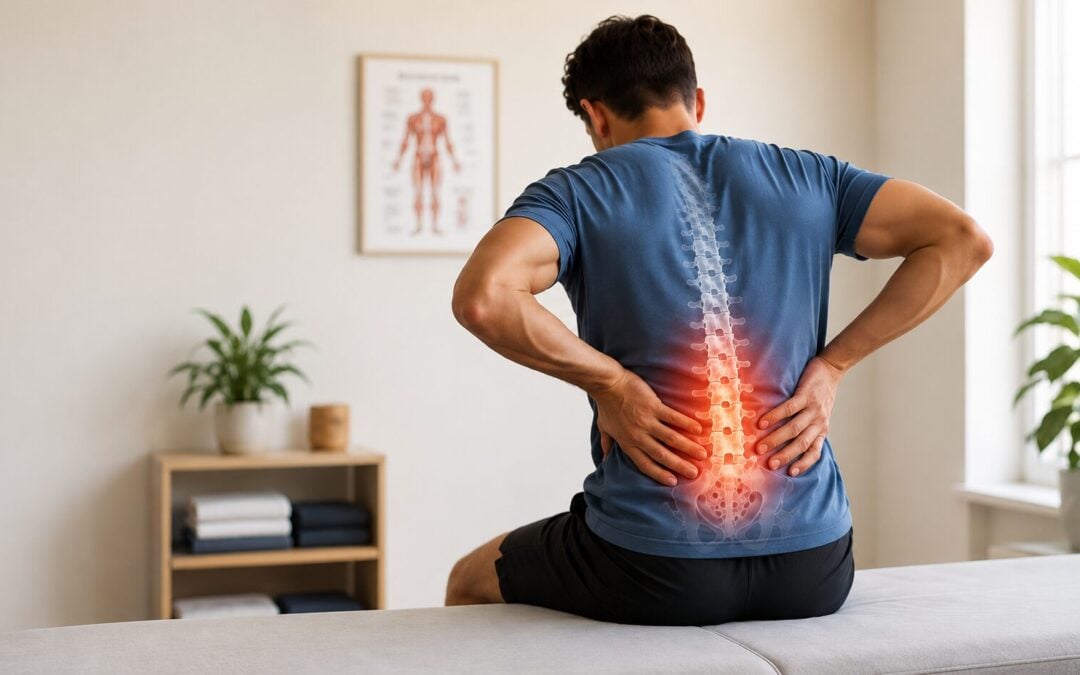
One of the biggest misconceptions about back pain is that it always means something has been seriously damaged.

In reality, the spine is an incredibly strong and adaptable structure. While lower back pain can certainly be painful and frustrating, most episodes are not caused by serious injury and often improve with time, appropriate movement and the right advice.

Back pain may involve several structures, including:

  • Muscles
  • Ligaments
  • Facet joints
  • Intervertebral discs
  • Nerves
  • Connective tissues surrounding the spine

In many cases, lower back pain develops as the result of several contributing factors rather than one single cause.


Common Causes of Lower Back Pain

Lower back pain can develop for many different reasons, including:

  • Lifting or twisting awkwardly
  • Prolonged sitting
  • Repetitive bending
  • Sporting injuries
  • Pregnancy-related changes
  • Osteoarthritis
  • Disc injuries
  • Muscle strains
  • Poor movement habits
  • Reduced physical activity
  • Previous back injuries

Sometimes symptoms begin after a specific incident, while at other times people simply wake up with a stiff or painful back.


Common Symptoms

Lower back pain can present in many different ways.

You may experience:

  • A dull ache across the lower back
  • Sharp pain when bending or standing
  • Difficulty getting out of bed
  • Pain after prolonged sitting
  • Pain travelling into the buttock
  • Stiffness first thing in the morning
  • Muscle spasm
  • Difficulty standing upright
  • Pain when lifting children, shopping bags or other everyday objects

If your pain travels below the knee or is associated with numbness, tingling or weakness, one of our osteopaths can assess whether a nerve may also be involved.


Do I Need an MRI or X-ray?

One of the first questions many patients ask is whether they need a scan.

For most people, the answer is no.

Research has shown that many people without back pain have age-related changes visible on MRI scans. Finding a disc bulge, arthritis or disc degeneration on a scan does not automatically mean these changes are responsible for your pain.

During your assessment, your Osteopath will determine whether imaging is appropriate. If we believe further investigation is necessary, we’ll discuss this with you.  Depending upon the scans required we may need to communicate with your GP or specialist.


When Should I Seek Urgent Medical Attention?

Although most episodes of lower back pain are not serious, certain symptoms require prompt medical assessment.

Seek urgent medical attention if you experience:

  • Loss of bladder or bowel control
  • Numbness around the groin or saddle region
  • Progressive weakness in one or both legs
  • Significant trauma
  • Fever accompanied by severe back pain
  • Unexplained weight loss
  • Severe pain that is constant and not improving

If you’re unsure, contact our clinic and we’ll help guide you towards the most appropriate care.


How Can Osteopathy Help?

Every episode of lower back pain is different.

Rather than applying the same treatment to everyone, we begin with a thorough assessment to understand the factors contributing to your symptoms.

Depending on your presentation, treatment may include:

  • Hands-on joint mobilisation or manipulation where appropriate
  • Soft tissue therapy
  • Dry needling (where appropriate)
  • Advice regarding activity modification
  • Individualised exercise prescription
  • Postural and workplace advice
  • Education to help you better understand your condition

Our aim is not simply to reduce your pain today, but to help reduce the likelihood of ongoing or recurring problems by improving your understanding, movement and confidence.


Why Exercise Matters

One of the biggest changes in back pain management over the past decade has been our understanding of the importance of movement.

While short periods of relative rest may occasionally be appropriate, prolonged bed rest is rarely recommended.

For most people, gradually returning to normal movement and rebuilding strength leads to better long-term outcomes than avoiding activity altogether.

Every person is different, which is why your exercise programme should be tailored to your individual abilities, goals and stage of recovery.


How Clinical Pilates May Help

For many people, hands-on treatment is only one part of recovery.

Clinical Pilates focuses on improving:

  • Core endurance
  • Hip strength
  • Movement confidence
  • Balance
  • Flexibility
  • Functional movement patterns

Unlike large fitness classes, your Clinical Pilates programme at gateway is individualised based around your needs, and our clinical pilates instructors are highly trained professional professionals and work closely with your treating practitioner.

This allows your rehabilitation to progress safely while exercises are modified as your symptoms improve.

Many patients transition from osteopathic treatment into Clinical Pilates to help reduce recurrent episodes of lower back pain and improve their long-term spinal health.


Frequently Asked Questions

Should I keep moving if my back hurts?

In most cases, yes. Gentle movement, such as walking, is generally more beneficial than prolonged rest.


Is my mattress causing my back pain?

Sometimes a mattress can contribute to symptoms, but it is rarely the sole cause. We’ll discuss this during your assessment if we believe it may be relevant.


Is it safe to exercise?

For most people, appropriate exercise is an important part of recovery. We’ll advise you on which activities are suitable based on your individual condition.


Will I need ongoing treatment?

Some people recover after only a few visits, while others with longstanding or recurrent pain benefit from a longer rehabilitation programme. We’ll discuss realistic expectations with you from the outset and develop a plan that suits your goals.


Why Choose Gateway Osteopathy?

We’ve been caring for the Eltham community since 2011 and believe the best outcomes come from combining hands-on care with education and active rehabilitation.

Our approach includes:

  • Thorough assessment
  • Individualised treatment
  • Exercise prescription
  • Clinical Pilates rehabilitation
  • Dry Needling
  • Shockwave Therapy where appropriate
  • Easy online booking
  • Private health fund rebates
  • Convenient on-site parking

Ready to Take the Next Step?

If lower back pain is affecting your work, sport or everyday life, we’d love to help.

Book an appointment with one of our experienced osteopaths and let us help you understand your back pain, improve your movement and get back to doing the things you enjoy.

Ready to Address Your Back Pain?

10 Minute Stretching

10 Minute Stretching

We asked Ashlea Crupi (Pilates Instructor) to share with us some of the stretches she gives her Pilates clients to do, and, what are the benefits of stretching?

Stretching has so many benefits, it relieves joint pain and stiffness, reduces muscle spasm, increases energy, reduces stress, increases range of motion, elongates and lengthens muscles, decompresses joints, improves posture, and enhances athletic performance to name a few.

With Ashlea’s help we have come up with a basic stretching program that can be performed in under 10 minutes.

This is a general program and remember that stretching should not hurt.

Should you feel pain instead of a gentle stretch, or if you have any injuries please stop and consult one of our team, we may be able to offer you an alternative or a more suitable stretch for your individual needs.

Each stretch is held for between 20-30 seconds.

Never bounce, hold your breath or stretch to the point of pain.


7 Tips Reduce Back Pain

7 Tips Reduce Back Pain

Reduce pain with good computer posture!

<iframe width="560" height="315" src="https://www.youtube.com/embed/ZLwIP8cBaWA" frameborder="0" allowfullscreen></iframe>

Ergonomics Video

What is Ergonomics?

Ergonomics is concerned with human anatomical, anthropometric, physiological and biomechanical characteristics as they relate to physical activity.  The relevant topics include working postures, materials handling, repetitive movements, work-related musculoskeletal disorders, workplace layout, safety and health.  .

The above video is a really good example of working postures when using a laptop.  Knowing that a number of not only adult patients but students are now using laptops on a daily basis I hope this little video link proves useful to help you avoid some pain.  If you have any specific questions, as always please don’t hesitate to speak with your treating Osteopath.

Poor Desk Posture? – Dr Stuart’s favourite corrective exercise.

Poor Desk Posture? – Dr Stuart’s favourite corrective exercise.

The Prone Cobra.

Many patients ask: 

“What exercises could I perform to assist or improve my posture?  We asked Dr Stuart Robbins (Osteopath) this question.

His Answer:

Whilst there are many, and that they usually need to be individualised to the patient’s specific needs, one of the more effective exercises I’ll often prescribe is The Prone Cobra.

I find the prone cobra, when performed in concert with a chest stretching routine, can have remarkable impact on improving patients posture.  Furthermore I personally perform this exercise for about 3 minutes in total every second day and have done for many years now.

It aims to reduce both thoracic kyphosis (rounded shoulders) and anterior (forward) head carriage, both of which I often see in patients suffering neck and shoulder tension and/or headaches.

The Prone Cobra when performed as I describe is not a stretch, but it is a strengthening exercise that focuses on postural muscles of the back and neck.  These postural muscles require endurance to cope with the demands of both gravity and occupational or recreational postural demands.  I find that it is especially relevant for many desk workers, students, breast-feeding mothers or even hands on fathers.

From the outset I want to say that performing this or any other exercise or routine aimed at improving your posture is almost a waste of time if you are still going to sit slumped at your desk.  For this reason I remind patients to address their ergonomics first; whilst I’m not going to go into ergonomics at length here I often refer patients to simple videos I feel tell the story on ergonomics quite well, I’ve included one here in the hope it also helps.

<iframe width="560" height="315" src="https://www.youtube.com/embed/ZLwIP8cBaWA" frameborder="0" allowfullscreen></iframe>

THE PRONE COBRA:

* Warning * If you have any specific concerns regarding your suitability to perform this or any other exercise please discuss it with your treating Osteopath in your next consultation.

1.  Gently squeeze your bottom to assist in stabilising your pelvis and low back.

2.  Slowly extend through your mid to upper back, lifting your head off the ground, keeping a neutral neck (keep your eyes down – you shouldn’t look around the room whilst performing this exercise and should have your nose approximately an iPhone width from the ground).

3.  Initially turn your palms towards the ground and then slowly away from yourself aiming your thumbs towards the sky.

Hold this final position for 5 – 30 seconds, you’ll likely feel muscles working between the shoulder blades and often at the back of your arms in your triceps.

Perform 3 – 6 times with 3-10 seconds break between sets.

* The frequency with which you’ll perform this exercise will depend upon the other demands of your life, but aiming for 6 x 30 seconds every couple of days will put you in good stead to cope with the demands of a desk based occupation.

4.  There are a number of variations and progressions with this exercise including changing the arm positions to represent letters – W’s, T’s, Y’s, L’s, and the use of resistance, all of which can be discussed with your treating practitioner.

Posterior Chain Bridging

Posterior Chain Bridging

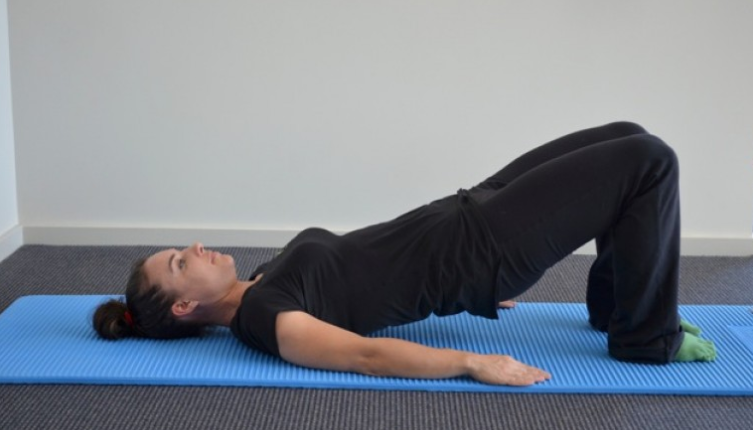
Supine Hip Extensions (Bridging)

Supine Hip Extension Start Position

Supine Hip Extension Start Position

Supine Hip Extension End Position.

Supine Hip Extension End Position.


Pictured:  Dr Rebecca Rowe – (Osteopath / Pilates Instrutor)

What is one of the simplest exercises to develop your gluteal or bottom muscles?

The supine hip extension or bridge has got to be one of the most effective and simple exercises for developing the gluteal muscles.  Done well it can also provide improved tracking for the knees and lower limbs.  It can be done almost anywhere, and you don’t need any equipment.

Step 1 – Position:-  Laying on your back with a neutral curve in the lumbar spine, this is where you have a little bit of space between your low back and the ground.  You should be able to slip you hand between your low back and the ground.  Knees are bent with feet on the ground as in the above picture.  Note if the distance from you heels to your buttocks is greater then you will use more of your hamstring muscles.

Step 2 – The motion:- Gradually peel your bottom off the ground, vertebrae by vertebrae feel you low back peel off the ground also.  You want to aim for a point where your knees, hips, and shoulders are in a straight line.  Watch for a tendency to allow the thighs to splay apart, this may happen if there is a muscular imbalance in the lower limbs.  If this is the case you may wish to fold a pillow or place a ball between your knees and gently squeeze it as you perform the exercise.  It may also help to feel a sense of lengthening though your knees as you rise to the top.

* Tempo: 2 seconds to rise | Pause 2 seconds at the top | 2 seconds to return your bottom to the ground.

* Aim for 3 Sets of between 10 to 30 repetitions.

* Please note that in the case of a disc and some other injuries to the low back you may be best to avoid the peeling or segmental movement of the lower back especially in the early stages of your rehabilitation.

** Please consult your Osteopath or Rehab Pilates instructor before conducting this exercise to review your suitability to perform it.